
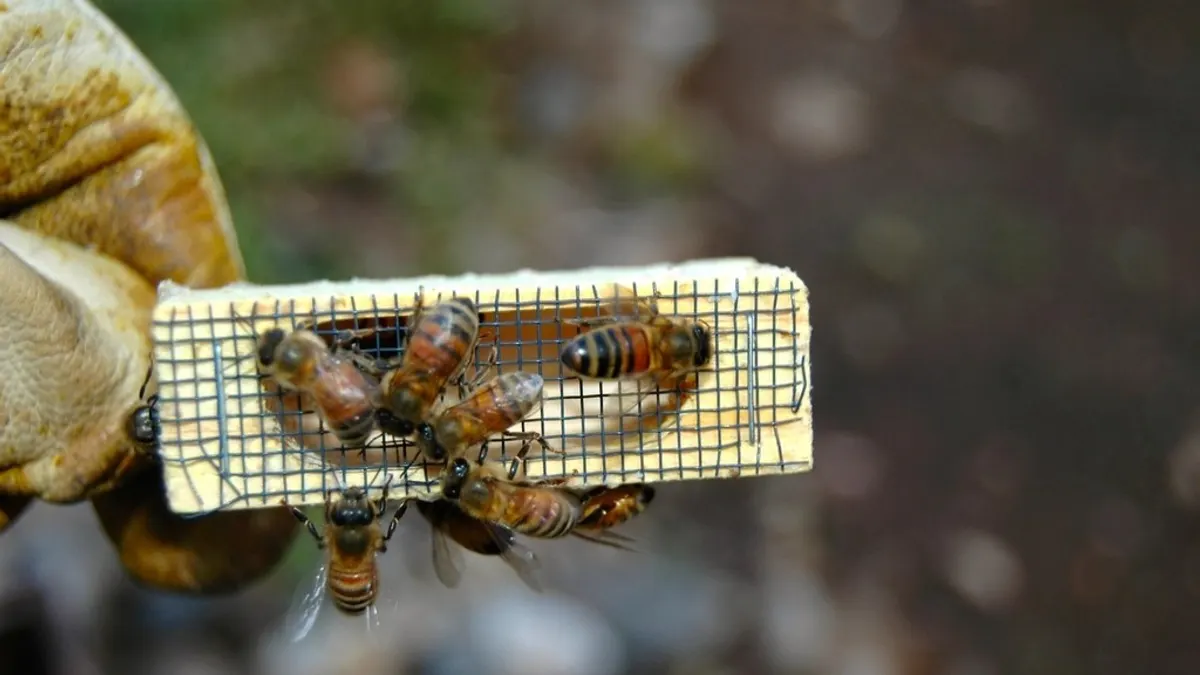
Where to Buy a Queen Bee: Breeders, Prices and Shipping (2026)
Affiliate disclosure: product links on this page go to Amazon or to the maker's own store. As an Amazon Associate we earn from qualifying purchases, and VEVOR pays us a commission on sales through our VEVOR links, at no extra cost to you; links to other makers' stores earn us nothing. No retailer or brand sees our picks before they are published or has any say in them. How we choose.
A mated queen bee comes from a queen breeder, a beekeeping supply company or a local beekeeper. Queen bees for sale on sellers' own pages in October 2026 ran from $32 each at Hawaiian Queen (minimum five queens) to $44.95 at Lappe's Bee Supply and $68.95 for Mann Lake's Florida-raised Italian queen, before shipping. Instrumentally inseminated breeder queens from VP Queen Bees cost $400. Amazon is not a source: its results for "live queen bee" on October 26, 2026 had no live queens.
Timing matters as much as price. Mann Lake's last 2026 ship date for its Florida queens was September 26, Hawaiian Queen ships through December 14, 2026, and spring queens are booked over the winter. This guide compares sellers, explains which kind of queen to buy, what heat does to a queen in the mail and what the guarantees cover, then gives Purdue Extension's steps for introducing her so the colony accepts her.
Queen bee prices in 2026
Each figure below comes from the seller's own page on October 26, 2026. Prices change every season, and shipping is extra unless the row says otherwise.
| Seller | Queen | Price | Minimum order | Shipping |
|---|---|---|---|---|
| Hawaiian Queen Co. (Captain Cook, Hawaii) | Italian or Carniolan, mated | $32 each for 5 to 24 (April 27 to December 14, 2026); $38 each for 25 to 49 (January 5 to April 20, 2026) | 5 queens; 25 from January to April | UPS 2-Day Air or FedEx Express, not included |
| Lappe's Bee Supply (Iowa) | Italian Hybrid or Carniolan, naturally mated and laying-tested; marking optional | $44.95 (2027 pre-order) | None listed | UPS Next Day; free on 3 or more queens shipping the same date |
| Mann Lake | Florida-raised Italian, mated and unmarked | $68.95 | None listed | UPS Next Day Air to the contiguous US, or pickup in Winter Haven, Florida |
| VP Queen Bees (South Carolina) | Instrumentally inseminated VSH breeder queen (Allegro or Pol-line 2.2) | $400; $500 or more with custom selection | None listed | UPS Next Day Air, extra |
The spread is mostly about order size and shipping. Hawaiian Queen's $32 price needs an order of at least five, which suits a club group order or a beekeeper with several hives. Lappe's ships free once you order three queens for the same date, so three cost $134.85 delivered; an order of one or two pays for overnight shipping. Mann Lake sells one at a time; its free-shipping offer covers orders over $150 sent by standard ground service, and queens go UPS Next Day Air.
The $400 queens are a different product. VP Queen Bees sells them as breeder queens for grafting daughters, and suggests taking delivery from September to November and overwintering them for early spring grafting. A backyard hive needs a production queen, the kind in the first three rows. UF/IFAS recommends a new queen every year, so read the table as a yearly cost per hive.
Where to buy one
A breeder or supply company that ships
The sellers in the table raise queens or sell them direct and ship by overnight or two-day air. Ordering direct gets you the breeder's line, its ship-date calendar and its guarantee, compared below. UF/IFAS's advice is to buy from a reputable breeder to reduce the risk of bringing disease or unwanted genetics into the hive. In Florida, UF notes, queens must come from a producer inspected and certified as raising queens without African ancestry.
A local beekeeper or club
A local queen never rides in a shipping box, which removes the temperature risk described below, and you can see her before you pay. Ask your state or county beekeeping association who raises queens nearby. Our guide to buying bees and equipment explains why the University of Georgia and Michigan State point new beekeepers to local sources. Mann Lake also offers pickup of its Florida queens at its Winter Haven store.
Not on Amazon
When we checked Amazon US for "live queen bee" on October 26, 2026, the results included queen cages, clips, marking kits, nuc boxes and books, but no live queens. Amazon is useful for the gear around a queen (listed at the end of this guide), not the queen herself.
When you need a new queen
UF/IFAS lists the signs of a failing queen: a poor brood pattern, with unsealed brood mixed through more than 20% of the frame; queen cells in the brood area, which can mean the colony is getting ready to replace her; and thick-capped drone cells scattered through worker brood, a sign she is running out of stored sperm. A queen can live more than seven years, UF notes, but her laying drops sharply after one or two, which is why it recommends replacing her every year.
The other reasons to buy are a queenless colony, a split that needs a queen, and a suspected Africanized queen, which UF says to replace with a queen of known pedigree. You can let a colony raise its own queen from swarm or supersedure cells, but UF says that can take several weeks and is more likely to fail. A purchased mated queen is usually the better choice.
Which kind of queen to buy
| Type | What it is | Who it suits |
|---|---|---|
| Mated (laying) queen | Mated and laying before she ships; Lappe's checks each queen's brood pattern first | Most buyers: requeening, a queenless hive or a split |
| Marked queen | A mated queen with a dot of paint in the year's color: white for 2026, yellow for 2027 (UF/IFAS) | Anyone who wants to find her faster and know her age; Lappe's marks to order, Mann Lake's ship unmarked |
| Virgin queen or queen cell | Not yet mated; she still has to fly out and mate after you install her | Experienced beekeepers; the colony waits, with the same delay and risk UF describes when bees raise their own queen |
| Instrumentally inseminated breeder queen | Inseminated by instrument with semen from selected drones; VP's cost $400 | Queen rearing; Purdue warns these queens can be harder to introduce, so give the colony extra time |
Italian, Carniolan, Russian hybrid and VSH (varroa sensitive hygiene) are lines bred for certain traits, and the descriptions come from the sellers. Mann Lake describes its Florida Italians as gentle, productive and prolific brood rearers. Lappe's crosses VSH Minnesota Hygienic Italian stock with Carniolan genetics, and says the VSH label does not guarantee a particular level of VSH behavior or remove the need to monitor and manage mites. Whatever line you buy, keep counting mites with a wash or a mite monitoring kit.
When to order
| When | What you can get | Source |
|---|---|---|
| Now to December 14, 2026 | Hawaiian Queen still ships 2026 queens at $32 each, minimum five | Hawaiian Queen |
| Late fall and winter | Pre-orders for spring: Lappe's lists its 2027 queens now, and Hawaiian Queen publishes 2027 prices in December | Sellers' pages |
| Spring | Hard to get late: Kona Queen Hawaii says it can't add anyone to its spring pre-order list, though it sometimes has extra queens if you call a week or two before you need them | Kona Queen FAQ |
| Late spring to early summer | The best window to requeen, when queens and drones are most available | UF/IFAS |
| Fall | Possible, but harder when food is short; feed 1:1 syrup before and during introduction in a dearth | Purdue |
On the mainland, the 2026 season is over or nearly over. Mann Lake's 2026 ship dates for its Florida-raised queens ran to September 26, and the page showed them out of stock on October 26; VP Queen Bees ships breeder queens only from mid-April through late October. Kona Queen also advises against setting up a split until the queens are in your hands, because shipping delays happen.
How queens ship, and what heat does to them
US Postal Service rules allow queen honey bees by air or surface mail. By air, each mailpiece is limited to one queen and up to eight attendant bees and must be marked "Live Queen Bees," and USPS requires bees to be kept between 40 and 100°F. The sellers above use UPS or FedEx instead. Mann Lake and VP Queen Bees ship UPS Next Day Air and Lappe's ships UPS Next Day. Hawaiian Queen ships UPS 2-Day Air or FedEx Express on Mondays and Tuesdays, adds a heating pad in cold weather and includes a USDA health certificate.
Temperature matters for more than survival. A 2020 University of British Columbia study found queens tolerated 15 to 38°C (59 to 100°F). Above 38°C, the share of live sperm a queen stores dropped to the level seen in failed queens. Temperature loggers in eight ordinary domestic queen shipments recorded one spike to 38°C and one drop to 4°C (39°F). Purdue Extension adds that extreme temperature swings can reduce a queen's fertility and pheromone output or cause early death, and its advice is to ask your supplier how it prepares shipments for extreme temperatures.
Order to a physical address where someone is home. Mann Lake can't ship live bees to PO boxes, and Lappe's says you must be present at delivery and report a dead queen within two hours of delivery, by UPS tracking.
What the guarantees cover
| Seller | On arrival | After you install her |
|---|---|---|
| Hawaiian Queen | Guarantees live delivery | Not covered on its pricing page |
| Lappe's | Live arrival guarantee if a dead queen is reported within 2 hours of delivery | No guarantee of acceptance, continued laying or colony performance |
| Mann Lake | A live, fertile queen | No refund or replacement if the colony rejects her; one free replacement if she is accepted but not laying within 10 to 14 days |
No seller guarantees that the colony will accept her. That part depends on how you introduce her.
When she arrives
Kona Queen Hawaii's instructions are to take the queens out of the shipping box as soon as possible, keep them out of the sun and away from pesticides, and give them water by touching a wet finger to the top of each cage so water fills the holes in the screen. A queen you can't use right away goes into a bank hive.
Purdue's checklist for a healthy queen: larger than the workers, with a longer and rounder abdomen; wings intact and well formed; strong legs; active when gently prodded; foot pads pearly white. Sluggishness, damaged wings or deformed wings (a sign of deformed wing virus) are warning signs.
How to introduce a purchased queen
Purdue Extension's first rule is that the colony must be queenless. Its steps for a cage with a candy plug:
- Find and remove the old queen, or confirm she is gone. Eggs mean a queen laid within the last three days; our hive inspection guide shows how to read the brood.
- Remove any queen cells so the colony can't raise its own queen.
- Leave the colony queenless for about 24 hours.
- Hang the cage between brood frames, screen facing down and the candy end angled slightly down, where workers can reach the candy.
- Let the workers chew through the candy, which takes 2 to 4 days. To slow the release, cap or tape the candy for a day or two first.
- If she is still caged after 4 days, release her by hand, unless workers are biting the cage. Purdue says never to release a queen while they are.
A small colony accepts a new queen more readily than a large one. Purdue suggests making a split, letting the old foragers fly back to the parent colony and introducing the queen after about 24 hours, because young bees accept a new queen more readily. In a nectar dearth, feed 1:1 sugar syrup before and during introduction; our sugar syrup calculator gives the amounts. For a large colony, Kona Queen suggests adding extra candy to the candy end of the cage to slow the release. A package's queen arrives caged too, and our package and nuc installation guide covers that case.
Gear for the job
A queen clip holds the old queen once you find her; UF/IFAS mentions a cage or queen catcher for isolating the queen. The Outus set has five clear clips and a marking cup with a sponge plunger (per the Amazon listing).
A five-frame nuc box holds the split Purdue recommends introducing into. The MayBee nuc box takes five deep frames and comes with a bottom board, entrance reducer, inner cover and top cover (per the Amazon listing).
If your queen arrives unmarked, as Mann Lake's do, our queen marking guide covers each year's color and how to mark her. The benefitbee kit has pens in the five year colors and four clear clips.
Frequently asked questions
How much does a queen bee cost?
On sellers' own pages in October 2026, a mated queen cost $32 each from Hawaiian Queen (minimum five), $44.95 from Lappe's Bee Supply and $68.95 from Mann Lake, before shipping. Instrumentally inseminated breeder queens from VP Queen Bees cost $400. Overnight shipping is extra unless you meet a seller's free-shipping minimum, such as three queens at Lappe's.
Can you buy a queen bee on Amazon?
Not a live one. When we checked Amazon US for "live queen bee" on October 26, 2026, the results included cages, clips, marking kits, nuc boxes and books, but no live queens. Buy the queen from a breeder, a beekeeping supplier or a local beekeeper, and use Amazon for the gear.
When can you buy queen bees?
Mann Lake's 2026 ship dates for its Florida-raised queens ended September 26, and VP Queen Bees ships breeder queens from mid-April through late October. Hawaiian Queen ships through December 14, 2026. Spring queens sell out, so order over the winter; Lappe's already lists 2027 queens.
How often should you replace a queen bee?
UF/IFAS recommends replacing her every year. A queen can live more than seven years, but UF says her laying drops sharply after one or two. Replace her sooner if the brood pattern is poor, the colony starts supersedure cells, or drone cells appear scattered through worker brood.
How long does it take for a hive to accept a new queen?
In a candy-plug cage, workers chew through the candy and release her in 2 to 4 days, according to Purdue Extension. If she is still caged after 4 days, release her by hand, but never while workers are biting the cage. Mann Lake guarantees an accepted queen will start laying within 10 to 14 days of installation.
Do you have to remove the old queen before adding a new one?
Yes. Purdue Extension says the colony must be queenless: remove the old queen or confirm she is gone, remove any queen cells, and leave the colony queenless for about 24 hours before hanging the new queen's cage between brood frames.
What should I do when my queen bee arrives in the mail?
Take her out of the shipping box, keep her out of the sun and away from pesticides, and give her water by touching a wet finger to the cage screen, as Kona Queen Hawaii advises. Check that she is active with intact wings. Report a dead queen quickly: Lappe's requires a report within two hours of delivery.
Sources
- Methods of Introducing Queens (E-277), Purdue University and Penn State Extension
- The Basics of Queen Management in Beekeeping Operations (ENY2128), UF/IFAS Extension
- Honey bees could help monitor fertility loss in insects due to climate change, University of British Columbia, Faculty of Science
- Publication 52, 526 Mailable Live Animals, US Postal Service
- Order Queens/Pricing, Hawaiian Queen Co.
- 2027 Italian Hybrid Queen Bee: Naturally Mated and Laying-Tested, Lappe's Bee Supply
- Florida Raised Italian Queen Bee, Mann Lake
- Package Bee/ Nuc/ Queen Policy, Waiver, & Guarantee, Mann Lake
- FAQ, Kona Queen Hawaii
- Buy VSH Breeder Queens, VP Queen Bees
Related guides
How to Start Beekeeping: The First-Year Steps in Order
Start in the fall, not in spring: check the rules, order bees by January, learn and set up two hives over the winter, install in spring, then feed, inspect every two weeks and watch for mites.
Best Beekeeping Books of 2026: What Bee Courses Actually Assign
Six books from the Rutgers, EAS and UGA reading lists, by stage: first read, first seasons, master beekeeper study, the reference shelf and bee biology, plus the free guides.
Beehive Insulation and Winter Wraps: What Works and When (2026)
What a 43-hive trial found about wrapping, which wraps and top insulation to use, how to keep condensation off the cluster, and when to wrap and unwrap.