
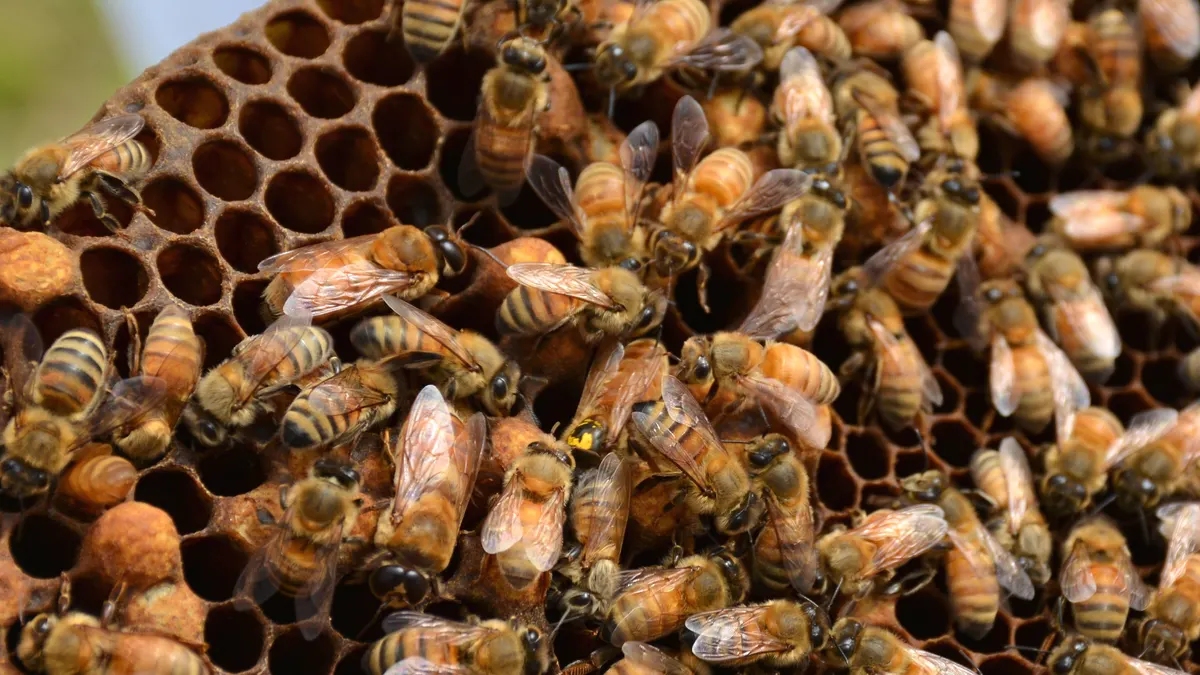
Queen Bee Marking Colors by Year (and How to Find the Queen)
Affiliate disclosure: product links on this page go to Amazon, or to the maker's own store for brands that sell only direct. As an Amazon Associate we earn from qualifying purchases, at no extra cost to you; a link to a maker's store earns us nothing. No retailer or brand sees our picks before they are published or has any say in them. How we choose.
Queen bee marking colors follow a five-year international code tied to the last digit of the year the queen was reared: white for years ending in 1 or 6, yellow for 2 or 7, red for 3 or 8, green for 4 or 9, and blue for 5 or 0. A queen raised in 2026 gets white; one raised in 2027 gets yellow. The code is printed in the University of Florida's queen management guide, and most marking pen sets come in exactly these five colors.
The mark does two jobs. It makes one bee easier to spot among tens of thousands, and it tells you her age at a glance, so you know when she is due to be replaced. This guide covers the color chart, how to mark a queen, and how to find her in the first place, which is the harder part.
Queen marking colors by year
| Color | Year ends in | Recent and coming years |
|---|---|---|
| White | 1 or 6 | 2021, 2026, 2031 |
| Yellow | 2 or 7 | 2022, 2027, 2032 |
| Red | 3 or 8 | 2023, 2028, 2033 |
| Green | 4 or 9 | 2024, 2029, 2034 |
| Blue | 5 or 0 | 2025, 2030, 2035 |
A common way to remember the order is the sentence "Will You Raise Good Bees": White, Yellow, Red, Green, Blue. The University of Florida's guide says to use the color for the year the queen was reared and installed, so a queen you buy in spring 2027 is marked yellow even if you mark her in June.
The colors repeat every five years. That is rarely a problem in practice, because UF/IFAS recommends replacing queens every year for full productivity: a queen can live past seven years, but her laying drops off sharply after one or two.
Why mark a queen at all
Marking is optional, and plenty of colonies are managed without it. The case for it is practical:
- Faster inspections. A painted dot on the thorax stands out on a crowded frame, so you spend less time with the hive open.
- You know her age. The color tells you which season she was reared without a notebook.
- You know if she was replaced. If you find an unmarked queen in a colony where you marked one, the bees have superseded her or swarmed. That is information you would otherwise miss.
Utah State University Extension adds one caution: a mark can wear off, and not every queen is marked, so learn her body shape as well and don't rely on the dot alone.
How to find the queen
Finding her is the step that stops most beginners. These steps come from Utah State University Extension's guide to identifying a queen.
Know what you are looking for
The queen has a long, tapered abdomen that reaches well past the tips of her folded wings. The top of her thorax is smooth and has less hair than a worker's, so it often looks darker and shiny. She is longer than the workers but narrow, and she carries no pollen on her back legs. Color is not a reliable guide: queens can be golden, brown or nearly black. Drones look wider and bulkier, so don't pick the biggest bee on the frame.
| Bee | Shape | Other signs |
|---|---|---|
| Queen | Long, tapered abdomen past the wing tips | Smooth, shiny thorax; one per colony; no pollen loads |
| Worker | Shorter and smaller | Most of the bees in the hive |
| Drone | Wide and rounded | Male; does not lay eggs |
Look in the right place, at the right time
- Open the hive on a warm, calm day and work slowly. Use only as much smoke as you need; the bee smoker guide covers fuel and size.
- Take out an outside frame first to make room, then work toward the brood nest. The queen is usually on a frame with eggs or young larvae, because she moves from cell to cell to lay. In a hive with two brood boxes she can be in either one.
- Hold each frame over the open hive. Scan one side from top to bottom, then turn it and scan the other side.
- Watch for movement rather than detail: a long bee walking from cell to cell and putting her abdomen into them.
- When you find her, put that frame back gently before doing anything else, unless you are ready to mark her.
USU suggests practicing in spring, when colonies are smaller and the queen is easier to find. In midsummer, with the hive at full strength, she is much harder to spot.
If you can't find her
Don't conclude the colony is queenless just because you did not see her. Look for fresh eggs and very young larvae instead: they show a queen was laying in the hive recently, which answers the real question. A queen cell (a long, peanut-shaped wax cell hanging down from the comb) is not the queen; it means the colony is raising a new one, either to replace her or to swarm.
A newly emerged, unmated queen is harder still. Penn State Extension notes that a virgin queen's abdomen is not yet swollen, so she moves quickly across the comb and is often difficult to locate. She spends five to eight days in the hive before her mating flights. If a colony has just raised its own queen, give it time and look for eggs later rather than searching every frame.
How to mark a queen
The University of Florida's method, in order:
- Find and isolate her. Use a queen cage or queen catcher to hold her away from the workers. Confident beekeepers pick her up gently by the wings.
- Test the pen first. Press it on another surface so you know the paint is not too runny and does not come out too fast.
- Dab the thorax. Brush a small dot of the year's color on the top of her thorax, the middle section between head and abdomen.
- Let it dry. Give it a few minutes before releasing her.
- Release her onto a frame and watch. If the workers act defensively toward her, put her in a queen cage for several hours and release her once they calm down.
Thick gloves make this fiddly; our beekeeping gloves guide covers the trade-off between protection and feel. Have a frame grip handy so you can lift the frame she is on without rolling bees against the box.
What to buy
You need a non-toxic, water-based paint pen in the right color and, ideally, something to hold her still. UF/IFAS notes that many US beekeepers use a broad-tipped POSCA PC-7M pen and that other brands work equally well. You only need one color a year, but five-color sets are inexpensive and cover every year.
| Option | What you get | Best for |
|---|---|---|
| POSCA PC-5M queen marking set | Five POSCA paint pens: white, yellow, red, green, light blue (per the Amazon listing) | Beekeepers who already own a queen catcher or mark by hand |
| benefitbee queen marking kit | Five color pens plus four clear plastic queen catcher clips (per the Amazon listing) | A first marking kit with everything in one box |
The POSCA PC-5M five-color set uses the same POSCA paint UF/IFAS names, in the medium PC-5M tip rather than the broad PC-7M. A medium tip makes a smaller dot, which is easier to keep on the thorax.
If you don't own a queen catcher, the benefitbee kit adds four clear clips that hold her against the comb while you mark her.
Buying a marked queen
If you order a mated queen, ask the breeder whether she ships marked and in which color; that saves you the job. When you install her, the steps in our package and nuc installation guide apply, and the beekeeping seasonal calendar shows where requeening fits in the year. UF/IFAS puts the best requeening window in late spring or early summer, when queens and drones are most available.
Frequently asked questions
What color do you mark a queen bee in 2026?
White. The international code gives white to years ending in 1 or 6, so queens reared in 2026 (and 2021 and 2031) are marked white. A queen reared in 2027 is marked yellow.
What are the 5 queen bee marking colors in order?
White (years ending 1 or 6), yellow (2 or 7), red (3 or 8), green (4 or 9) and blue (5 or 0). The sentence "Will You Raise Good Bees" gives the order by first letter.
Do you have to mark your queen bee?
No. Marking is a management choice. It makes the queen faster to find, records her age, and shows you if the colony has replaced her, but colonies do fine with unmarked queens.
Where on the queen do you put the paint?
On the top of the thorax, the middle section between her head and abdomen. University of Florida guidance is to brush a small dot there and let it dry for a few minutes before releasing her.
How do I find the queen bee in my hive?
Start in the brood nest, on frames with eggs and young larvae, on a warm, calm day. Look for the bee with a long abdomen that reaches past her wing tips and a smooth, shiny thorax. If you cannot find her, fresh eggs show she was laying recently.
What kind of pen do you use to mark a queen bee?
A non-toxic, water-based paint marker. UF/IFAS notes many US beekeepers use a broad-tipped POSCA PC-7M pen, and other brands work as well. Test it on another surface first so the paint is not runny.
Sources
- ENY2128/IN1457: The Basics of Queen Management in Beekeeping Operations, University of Florida IFAS Extension
- How Can I Identify a Queen Bee?, Utah State University Extension
- An Introduction to Queen Honey Bee Development, Penn State Extension
Cover photo: Queen Bee by U.S. Geological Survey, Public Domain Mark, via Wikimedia Commons. Cropped.
Related guides
Varroa Mite Treatments Compared: Apivar, Formic, Oxalic and Thymol
Eight registered varroa treatments from their labels: how long each stays in, the temperature window, and which ones you can use with honey supers on.
Beekeeping Seasonal Calendar: What to Do Each Season, From the Extension Guides
The year in five seasons from the extension guides: feeding, inspections, mite counts, supers, harvest, winter prep, and the gear for each.
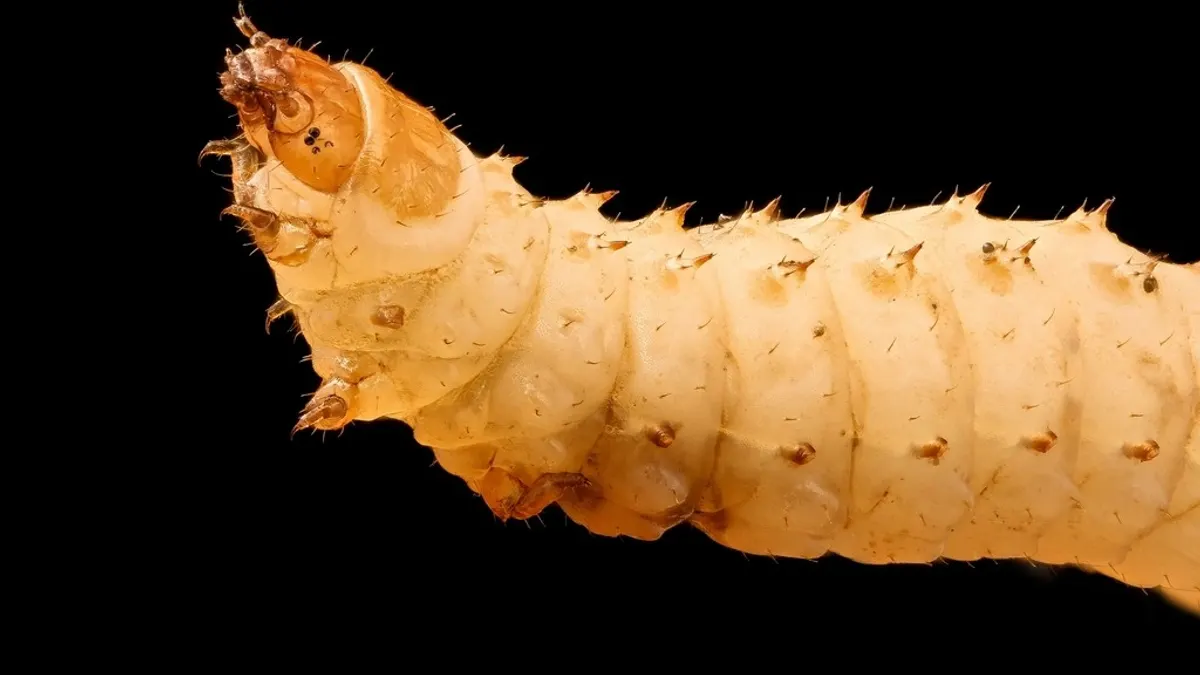
Best Small Hive Beetle Traps of 2026: Oil Traps and Screened Bottom Boards
Three in-frame oil traps and two screened bottom boards, with UF/IFAS's integrated beetle management and what goes in the trap.