
Beekeeping Seasonal Calendar: What to Do Each Season, From the Extension Guides
Affiliate disclosure: product links on this page go to Amazon, or to the maker's own store for brands that sell only direct. As an Amazon Associate we earn from qualifying purchases, at no extra cost to you; a link to a maker's store earns us nothing. No retailer or brand sees our picks before they are published or has any say in them. How we choose.
A colony's year runs on daylight and forage, not the calendar, so this guide is written in seasons with the extension sources' own markers: Penn State's seasonal guide (brood rearing from mid-February in the Northeast, inspections every two weeks in late spring and early summer, the July dearth, winter bees raised in August and September that live up to six months), the Honey Bee Health Coalition's Varroa phases, UNH's feeding schedule (1:1 in April and May, 2:1 in September and October), UGA's 60-pound winter stores minimum and Oregon State's rule to stop syrup below 57 °F. Each season names the gear: the Varroa EasyCheck for every count, the Mann Lake top feeder for spring and fall syrup, a medium super for the flow and the Apivar 2.0 strips as one of the labelled fall treatments.
Our top picks at a glance
1. Every season
Mann Lake Varroa EasyCheckSeason: Spring through fall, monthly; after every treatment · Job: Alcohol wash or sugar roll of about 300 bees · Price: $31 ($25.99 at Mann Lake)
2. Spring and fall
Mann Lake Top Hive Feeder with Unpainted Wood Super (10-frame)Season: Spring (1:1) and fall (2:1) · Job: Feeding without opening the brood nest · Price: $44
3. Late spring
BeeCastle 8-Frame Medium Super with Frames, Beeswax DippedSeason: Late spring, before the main flow · Job: Honey super · Price: $50 (8-frame); MayBee's 10-frame medium is $50
4. Late summer
Apivar 2.0 Amitraz Strips, 4 StripsSeason: Late summer, after the harvest and the count · Job: Treatment when the count is over 2 to 3 percent (HBHC) · Price: $30 for four strips
| Pick | Season | Job | Price | Buy |
|---|---|---|---|---|
| Mann Lake Varroa EasyCheckEvery season | Spring through fall, monthly; after every treatment | Alcohol wash or sugar roll of about 300 bees | $31 ($25.99 at Mann Lake) | Amazon |
| Mann Lake Top Hive Feeder with Unpainted Wood Super (10-frame)Spring and fall | Spring (1:1) and fall (2:1) | Feeding without opening the brood nest | $44 | Amazon |
| BeeCastle 8-Frame Medium Super with Frames, Beeswax DippedLate spring | Late spring, before the main flow | Honey super | $50 (8-frame); MayBee's 10-frame medium is $50 | Amazon |
| Apivar 2.0 Amitraz Strips, 4 StripsLate summer | Late summer, after the harvest and the count | Treatment when the count is over 2 to 3 percent (HBHC) | $30 for four strips | Amazon |
Every season
Mann Lake Varroa EasyCheck
The mite count is the one job on every season's list; the EasyCheck's 300-bee line is the HBHC sample.
- Season
- Spring through fall, monthly; after every treatment
- Job
- Alcohol wash or sugar roll of about 300 bees
- Price
- $31 ($25.99 at Mann Lake)
- Threshold
- Under 1 percent dormant; under 2 percent increase and peak; treat at 2 to 3 percent (HBHC)
Pros
- 300-bee line
- Three methods
- Mann Lake's instructions
Cons
- Alcohol kills the sample
- $5 more on Amazon
- Listing figures only
The Varroa guide has the method and the thresholds by phase.
Spring and fall
Mann Lake Top Hive Feeder with Unpainted Wood Super (10-frame)
Four gallons of 1:1 in April and May for a light colony or a package, and 2:1 in September and October to reach winter weight (UNH).
- Season
- Spring (1:1) and fall (2:1)
- Job
- Feeding without opening the brood nest
- Price
- $44
- Capacity
- 4 gal, 10-frame (Mann Lake)
Pros
- Gallons per fill
- Outer cover only
- Screen against drowning
Cons
- Adds height
- Unpainted
- Heavy full
The feeder guide has the other types and the syrup calculator the sugar.
Late spring
BeeCastle 8-Frame Medium Super with Frames, Beeswax Dipped
A medium super with frames goes on when the brood boxes are full and the flow starts; buy it the winter before.
- Season
- Late spring, before the main flow
- Job
- Honey super
- Price
- $50 (8-frame); MayBee's 10-frame medium is $50
- Contents
- Medium box with 8 frames and waxed foundation (per the Amazon listing)
Pros
- Box and frames together
- Wax coated
- Cheap enough to buy two
Cons
- 8-frame; buy the 10-frame MayBee for a 10-frame hive
- Listing figures only
- Unassembled
Supers go on when the colony covers its brood boxes and the flow begins; Mann Lake's note is that drawing them can take two seasons. The hive kit guide covers the add-on boxes.
Late summer
Apivar 2.0 Amitraz Strips, 4 Strips
One of the labelled treatments for the late-summer count that decides the winter: amitraz strips, 42 days without brood or 70 with, no temperature window.
- Season
- Late summer, after the harvest and the count
- Job
- Treatment when the count is over 2 to 3 percent (HBHC)
- Price
- $30 for four strips
- Label
- Supers off; 42 or 70 days (label)
Pros
- No temperature constraint
- Long release
- Manufacturer label online
Cons
- Supers off
- Rotate with another active
- Count afterwards
The Varroa guide compares Apiguard, Formic Pro and VarroxSan on their labels; which one fits depends on the temperature and whether supers are on.
Late winter (brood starts)
Penn State: brood rearing begins in mid-February in the Northeast, which is when stores run down fastest. Heft the hive; add fondant or dry sugar on top if it is light (Penn State: fondant in winter, not syrup). Oregon State's rule for liquid: not below 57 °F daytime (the HBHC uses 50 °F). A broodless oxalic acid treatment (Penn State: when broodless) belongs here or in early winter, per the product label. Do not open the brood nest in the cold; a quick lift of the lid on a mild day is the inspection.
Spring (population increase)
Feed 1:1 in April and May if the colony is light (UNH; UGA: feed heavily when light). First full inspection on a warm day: queen laying, brood pattern, stores, space. Install packages and nucs (the installation guide). Inspect every two weeks from late spring to early summer (Penn State). Count mites; HBHC's spring threshold is 2 to 3 percent. Add the second brood box when the first is seven or eight frames drawn; add supers ahead of the flow. Swarm season: a crowded strong hive wants to swarm, and a split into a nuc box (the how-many-hives guide) is the beekeeper's answer. Bear fence on by May 1 (Maine).
Summer (peak)
Supers fill. Penn State's July dearth: forage drops in midsummer in the Northeast, robbing starts, and entrance feeders are a liability. Keep the count going (HBHC peak threshold: treat over 3 percent). Water nearby. A queen takes about 16 days from egg to emergence (Penn State), which is the clock to watch after a swarm or a split: a new queen is laying three to four weeks after the split. Harvest capped supers at the end of the flow (the harvest checklist).
Late summer (winter bees)
Penn State: the bees raised in August and September are the winter bees, living up to six months, and they are raised by a colony whose mite load is at its highest. This is the count that matters most. Treat on the label if the count is over the HBHC threshold, with supers off for Apivar and Apiguard; Formic Pro's label allows supers on. Reduce entrances against robbing.
Fall (population decrease)
Penn State: weigh, feed and combine. Feed 2:1 in September and October (UNH) until the hive reaches weight: UGA's minimum is 60 pounds of stores in Georgia; UF/IFAS puts the North at about 90 pounds of honey. Combine a weak colony with a strong one rather than wintering two weak ones. Count mites again after treatment. Stop syrup when days fall below 57 °F (Oregon State). Mouse guard on, entrance reduced, hive strapped, fence on until November 1 (Maine). Store extracted supers where wax moths cannot reach them.
Winter (dormant)
Leave them alone. Heft on mild days; fondant on top if light. HBHC's dormant threshold is 1 percent, and the broodless window is when oxalic acid works on the label's terms. Order bees for spring (Penn State: the fall before). Assemble and paint woodenware now so it cures (Betterbee's guide). Read the coating guide and the catalogues.
The year in a table
| Season | Marker (source) | Jobs | Gear |
|---|---|---|---|
| Late winter | Brood from mid-Feb, NE (Penn State) | Heft, fondant, broodless oxalic per label | Fondant; EasyCheck |
| Spring | 1:1 Apr to May (UNH); inspect every 2 weeks (Penn State) | Feed, inspect, install bees, count, add boxes, split, fence up May 1 (Maine) | Top feeder, second deep, nuc box, fence |
| Summer | July dearth (Penn State); peak threshold 3 percent (HBHC) | Supers, count, water, harvest | Supers, extractor, sieve, bucket |
| Late summer | Winter bees Aug to Sep, live up to 6 months (Penn State) | The count, treat on label, reduce entrances | EasyCheck, labelled treatment |
| Fall | 2:1 Sep to Oct (UNH); 60 lb stores (UGA); syrup stops below 57 °F (Oregon State) | Weigh, feed, combine, recount, mouse guard, strap, fence to Nov 1 | Top feeder, mouse guard, strap |
| Winter | Dormant threshold 1 percent (HBHC) | Leave alone, heft, order bees, build woodenware | Fondant; catalogue |
Where this calendar is wrong
It is a Northeast calendar, because Penn State's and UNH's markers are. Georgia feeds in January and February (UGA); Florida has beetles and a winter flow; the Pacific Northwest has Oregon State's own course. The phases (brood start, increase, peak, decrease, dormant) hold everywhere; the months move. Your club's calendar is the local one.
Frequently asked questions
When do bees start raising brood?
Penn State Extension puts brood rearing from mid-February in the Northeast, which is when winter stores run down fastest and the hive should be hefted and given fondant if light.
How often should I inspect a hive?
Every two weeks in late spring and early summer (Penn State Extension), less in the dearth and heat of midsummer, and not at all in cold weather beyond lifting the lid on a mild day.
When should I treat for Varroa?
When the count is over the Honey Bee Health Coalition's threshold for the phase (2 to 3 percent in spring and fall, 3 at summer peak, 1 in winter), and in particular after the late-summer count, because the winter bees are being raised then (Penn State). Use a labelled product on its label.
When do I feed 2:1 syrup?
September and October (UNH's 4-H manual), until the hive reaches weight: UGA's minimum is 60 pounds of stores in Georgia, UF/IFAS puts the North at about 90 pounds. Stop when days drop below 57 °F (Oregon State).
What is the July dearth?
The midsummer gap in forage Penn State's guide describes for the Northeast, when robbing starts and entrance feeders become a liability. Reduce entrances and keep water nearby.
When should the bear fence be on?
May 1 to November 1 in Maine's guidance, with a weekly voltage check. Yards within 300 feet of forest get about twice the bear visits.
Sources
- Seasonal Beekeeping Guide, Penn State Extension
- Tools for Varroa Management (8th edition), Honey Bee Health Coalition
- 4-H Beekeeping Project Manual, University of New Hampshire Extension
- Feeding Honey Bees, University of Georgia Honey Bee Program
- How do I source bees for a new beehive box?, Oregon State University Extension
- Welcome to the Apiary! Honey Bee 4-H Project Book (4H446), UF/IFAS Extension
- Electric Fencing for Bee Yards (Maine IFW), Maine Department of Inland Fisheries and Wildlife
- How To Paint Bee Boxes, Betterbee
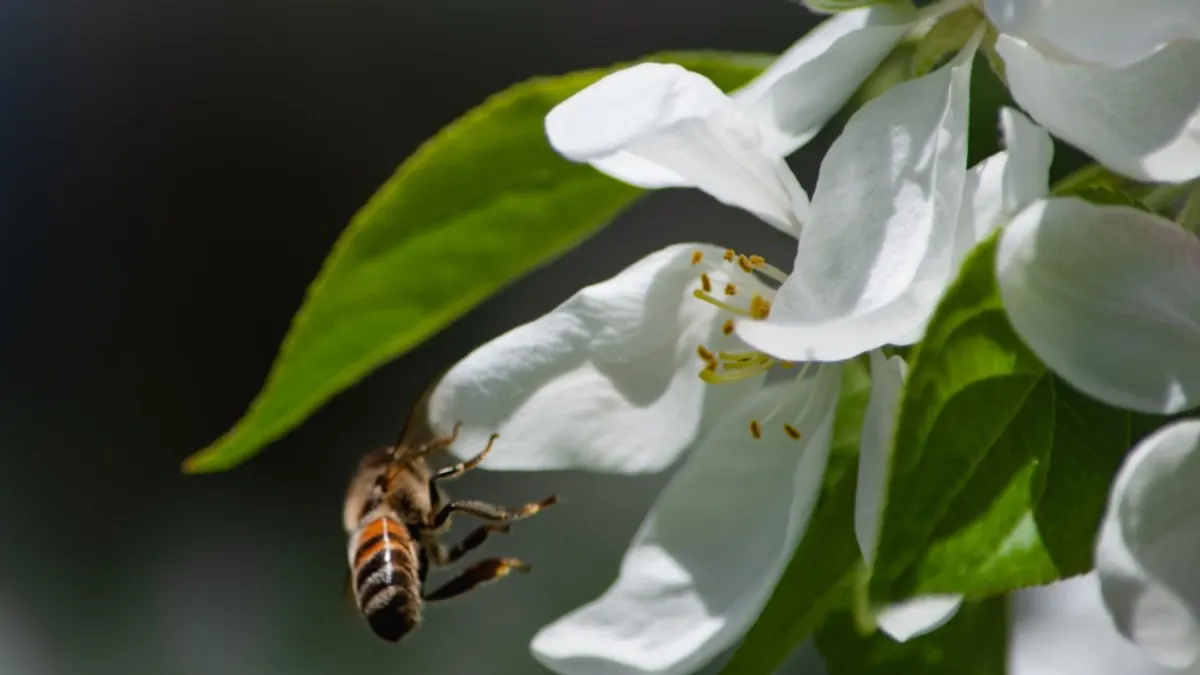
Cover photo: Bee Flower by Tricia Gray, CC0 1.0, via StockSnap. Cropped.
Related guides
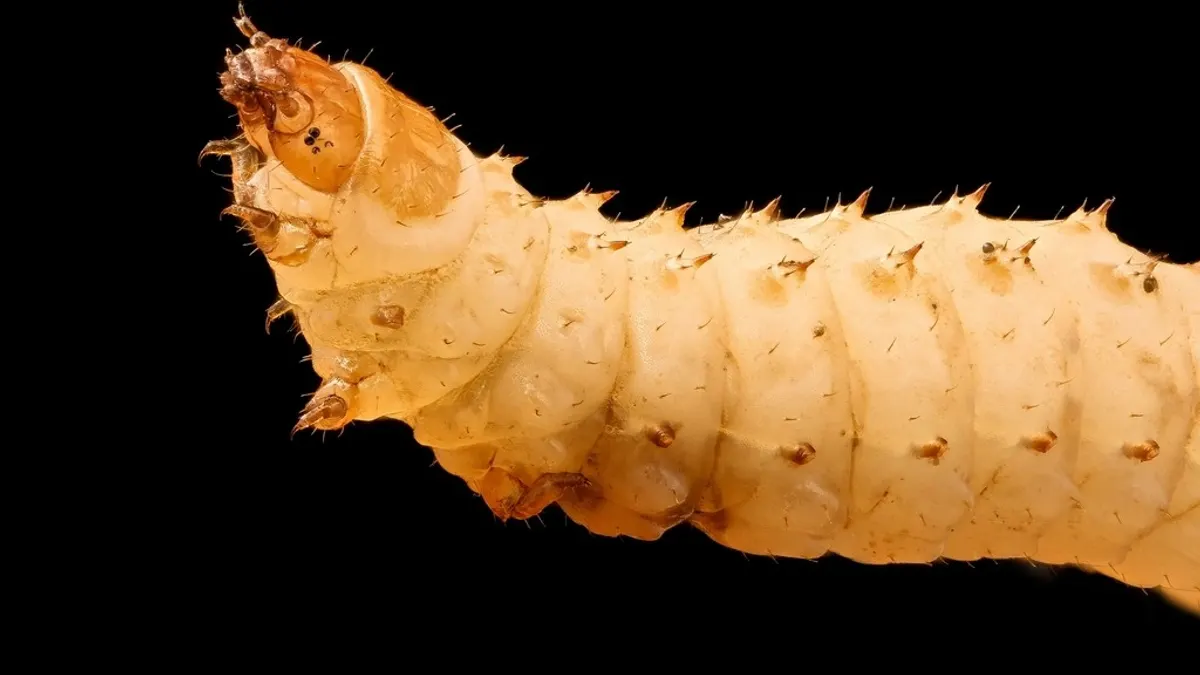
Best Small Hive Beetle Traps of 2026: Oil Traps and Screened Bottom Boards
Three in-frame oil traps and two screened bottom boards, with UF/IFAS's integrated beetle management and what goes in the trap.
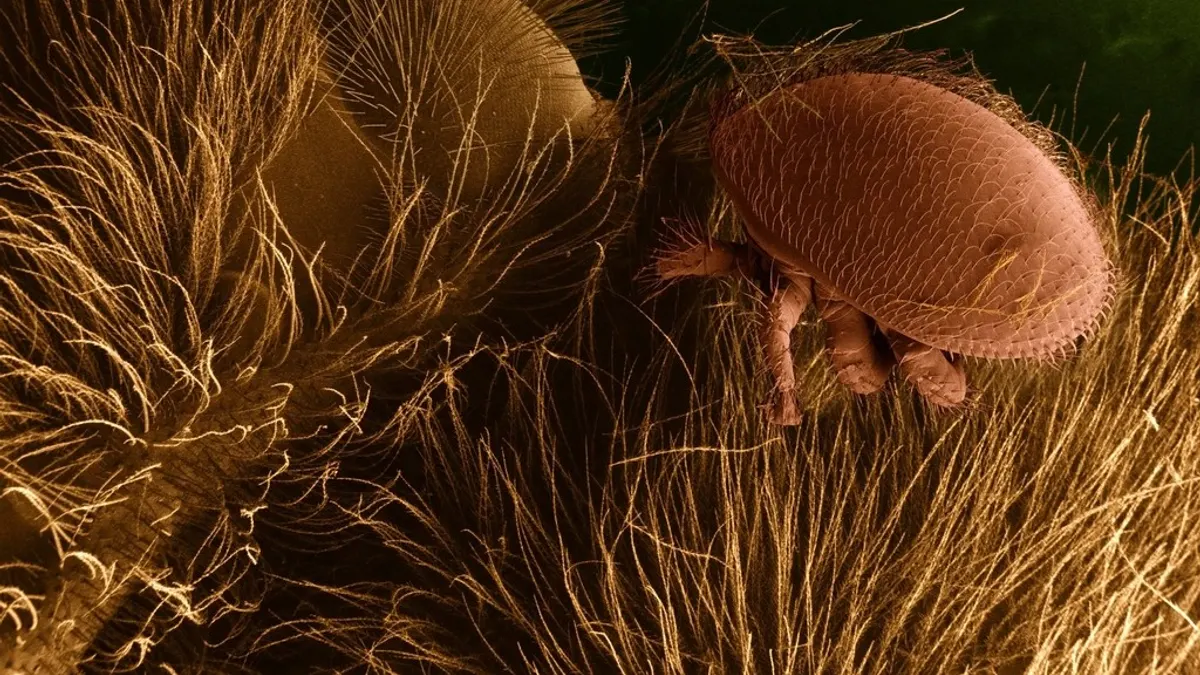
Best Varroa Mite Monitoring Kits and Treatments of 2026: EasyCheck and Labels
Two EasyCheck washers, the HBHC thresholds by season, and four labelled treatments with their timing, temperature and super rules.
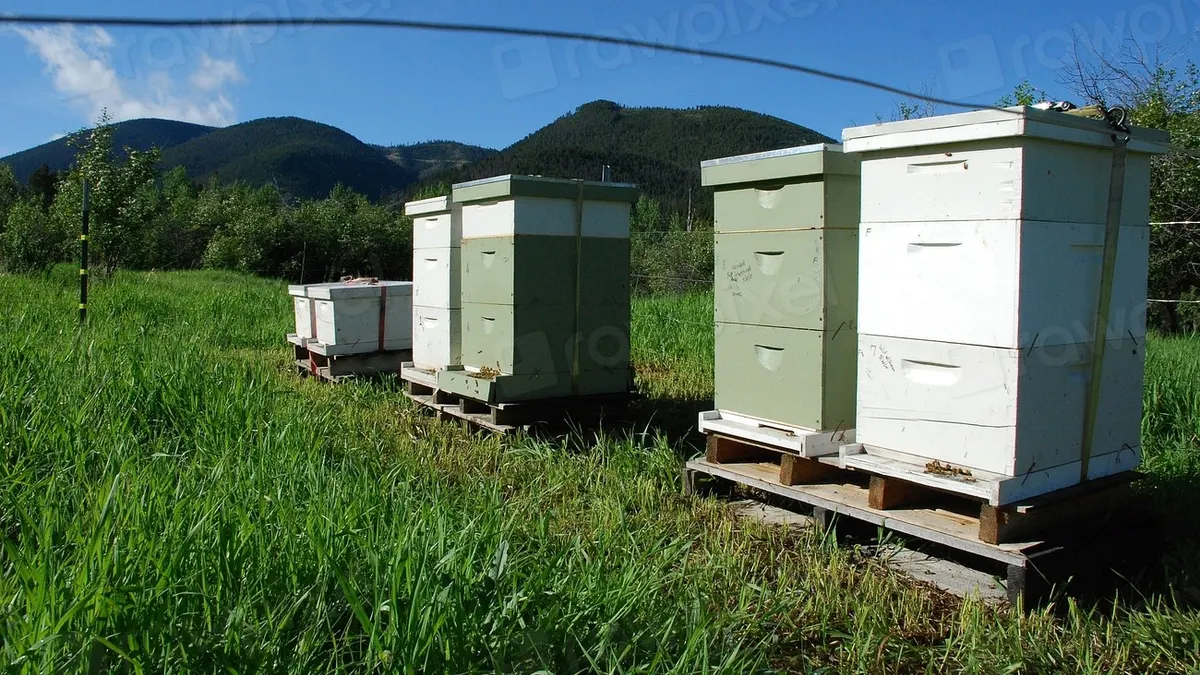
How Many Hives to Start With: Why Extension Says Two, and What It Costs
Why two hives beat one, what the second costs, spacing and layout, and the state registration rules we found.