
How Many Hives to Start With: Why Extension Says Two, and What It Costs
Affiliate disclosure: product links on this page go to Amazon, or to the maker's own store for brands that sell only direct. As an Amazon Associate we earn from qualifying purchases, at no extra cost to you; a link to a maker's store earns us nothing. No retailer or brand sees our picks before they are published or has any say in them. How we choose.
Two. Oregon State's beginner guidance is to begin with one to two colonies; the University of Georgia's is to buy two established colonies locally; Michigan State's is to join a club first and buy from a local supplier. The case for the second hive is comparison and rescue: with two you can see which one is normal, and a frame of eggs or brood from the strong one can save a queenless or weak one. The second hive costs the woodenware and the bees, not the gear: the Hoover Gold Standard is about $155 and a 5-frame nuc box ($83) is the third piece of equipment a two-hive beekeeper buys, for splits and swarms. The suit, smoker, tools and extractor are bought once; the startup cost calculator shows how the per-hive total falls with the second hive.
Our top picks at a glance
1. The second hive
Hoover Hives Gold Standard 10-Frame Beehive Kit (2 deeps, 1 medium, beeswax dipped)Role: Second hive · Why: Same 10-frame standard as the first, so a frame of brood can move across · Price: About $155
2. The third box
MayBee 5-Frame Nuc Box Kit, Wax-Coated CedarRole: Nuc box · Why: A two-hive yard makes splits and catches swarms; they need somewhere to go · Price: $83
3. The optional one
Mann Lake Wood Bound Metal Queen Excluder, 10-FrameRole: Queen excluder · Why: Keeps brood out of the honey supers; one per hive in year two · Price: $33
| Pick | Role | Why | Price | Buy |
|---|---|---|---|---|
| Hoover Hives Gold Standard 10-Frame Beehive Kit (2 deeps, 1 medium, beeswax dipped)The second hive | Second hive | Same 10-frame standard as the first, so a frame of brood can move across | About $155 | Amazon |
| MayBee 5-Frame Nuc Box Kit, Wax-Coated CedarThe third box | Nuc box | A two-hive yard makes splits and catches swarms; they need somewhere to go | $83 | Amazon |
| Mann Lake Wood Bound Metal Queen Excluder, 10-FrameThe optional one | Queen excluder | Keeps brood out of the honey supers; one per hive in year two | $33 | Amazon |
The second hive
Hoover Hives Gold Standard 10-Frame Beehive Kit (2 deeps, 1 medium, beeswax dipped)
Two deeps and a medium, beeswax dipped, at the standard dimensions, so frames move between hive one and hive two.
- Role
- Second hive
- Why
- Same 10-frame standard as the first, so a frame of brood can move across
- Price
- About $155
- Boxes
- 2 deep, 1 medium, 30 frames (Hoover)
Pros
- Frames interchange with any standard 10-frame hive
- Nothing to paint
- Hoover states the dimensions
Cons
- Unassembled
- Buy the same width as hive one; 8- and 10-frame parts do not mix (Hoover)
- No warranty term
The reason the second hive must match the first is frames: the rescue move is a frame of eggs or capped brood from the strong hive into the weak one, and it only works if the frame fits. Pick one width (the comparison) and buy both hives in it.
The third box
MayBee 5-Frame Nuc Box Kit, Wax-Coated Cedar
A 5-frame nuc box in wax-coated cedar with five frames, a metal top and a vented inner board: for a split, a caught swarm or a spare queen.
- Role
- Nuc box
- Why
- A two-hive yard makes splits and catches swarms; they need somewhere to go
- Price
- $83
- Size
- 19.9 x 9 x 13.3 in; 5 pine frames with wax-coated foundation; metal top, vented inner board, removable bottom with reducer (per the Amazon listing)
Pros
- Complete with frames and covers
- Deep frames, so they move into a full hive
- Wax coated
Cons
- $83 for five frames of box
- MayBee has no spec page; listing figures
- Unassembled
MayBee's nuc box is listed at 19.9 by 9 by 13.3 inches in heavy wax-coated cedar with five pine frames on beeswaxed foundation, a metal top cover, a vented inner board and a detachable bottom board with an entrance reducer. By the second spring a healthy hive wants to swarm; a split into a nuc box is how a two-hive beekeeper becomes a three-hive one without buying bees.
The optional one
Mann Lake Wood Bound Metal Queen Excluder, 10-Frame
Mann Lake's wood-bound metal queen excluder, $33, for the second season when the honey supers go on.
- Role
- Queen excluder
- Why
- Keeps brood out of the honey supers; one per hive in year two
- Price
- $33
- Build
- Wood frame with welded, plated wire at worker spacing (per the Amazon listing)
Pros
- Wood bound, so it holds bee space
- Welded wire
- Mann Lake
Cons
- Not needed in year one
- Only 20 in stock when read
- Some beekeepers run without one
Mann Lake's excluder is listed as a wood-bound metal grid with computer-controlled welding and precision wire spacing that stops the queen and passes workers. It is on this page because it is the one item a two-hive beekeeper tends to buy twice in year two and could have bought with the hives; the Hoover and Honey Lake kits include a plastic one.
Why two
A single hive gives you nothing to compare it with: you cannot tell slow from sick, and if the queen fails there is no brood to rescue it with. With two, the strong hive is the reference and the donor. Oregon State says one to two colonies; UGA says two established colonies, bought locally; Michigan State says join the club first. None of them says five.
Why not five
Each hive is inspected every two weeks in late spring and early summer (Penn State), fed, counted for mites and worked at harvest. Five hives in a first year is a part-time job before the beekeeper knows what a healthy frame looks like. Oregon's registration threshold is five colonies, which is a reasonable line between a hobby yard and a sideline.
What the second hive costs
| Item | Bought per hive | Bought once | Price (our picks) |
|---|---|---|---|
| Hive woodenware | Yes | $155 (Hoover) | |
| Bees | Yes | From the supplier's list; see the where-to-buy guide | |
| Feeder | Yes | $44 (Mann Lake top) or $17 (frame feeder) | |
| Stand | Yes, or one rail stand | $23 to $39 | |
| Jacket, gloves, smoker, tools | Yes | About $130 | |
| Extractor | Yes, year two | $105 and up | |
| Nuc box | Yes, year two | $83 |
The calculator takes your own quotes.
Layout
Hives on stands at least 12 inches up (Betterbee), entrances facing away from paths and neighbours, with room to stand behind each hive. If a bear fence is coming, keep 4 feet between the wires and the hives (Massachusetts). Two hives on one rail stand (Lyson brackets in the stand guide) leaves a gap between them to set frames on. Water within reach from day one, or the bees find the neighbour's pool.
Registration and rules
| State | Registration | Source |
|---|---|---|
| Pennsylvania | Required for any apiary | Penn State Extension |
| Florida | Required for any number of colonies | UF/IFAS |
| Oregon | Required at five or more colonies | Oregon State Extension |
| Michigan | No state registration; city ordinances and HOA rules apply | Michigan State Extension |
Those are the four we read; every other state has its own rule, and the state apiarist's page is the place to check. Michigan State's note about ordinances applies everywhere: a city may limit hive numbers, set setbacks, or require a water source and a flyway barrier.
Local bees, local club
UGA's advice to buy local established colonies and Michigan State's to join a club first point the same way: the club is where the nucs, the loaned extractor and the mentor are. The where-to-buy guide covers packages, nucs and the suppliers.
Frequently asked questions
How many beehives should a beginner start with?
Two. Oregon State Extension says one to two colonies, the University of Georgia says two established colonies bought locally, and Michigan State says join a club first. Two lets you compare and rescue; one leaves you guessing.
Is one hive enough to start?
It works, but a single hive gives no comparison and no brood to rescue a failing queen with. The second hive costs woodenware, bees, a feeder and a stand; the gear is bought once.
How far apart should beehives be?
Far enough to stand beside each and set a frame between them; two on a shared rail stand with a gap is common. Keep 4 feet between hives and any bear fence wire (Massachusetts) and entrances away from paths.
Do I have to register my beehives?
It depends on the state: Pennsylvania and Florida require it for any apiary, Oregon at five or more colonies, Michigan not at all (sources: the extension services). Check the state apiarist's page and the city ordinance.
When do I need a nuc box?
By the second spring, when a healthy hive wants to swarm and a split into a 5-frame nuc box ($83) turns two hives into three without buying bees.
How much does a second hive cost?
About $155 for the Hoover woodenware, plus bees from the supplier's list, a feeder ($17 to $44) and a stand ($23 to $39). The suit, smoker, tools and extractor are not bought again.
Sources
- How do I source bees for a new beehive box?, Oregon State University Extension
- Getting Started (Honey Bee Program), University of Georgia Honey Bee Program
- Transferring and placing honey bees this spring, Michigan State University Extension
- Beekeeping - Honey Bees, Penn State Extension
- Welcome to the Apiary! Honey Bee 4-H Project Book (4H446), UF/IFAS Extension
- Where to Place Your Hive, Betterbee
- Electric Fencing for Bears, Massachusetts Division of Fisheries and Wildlife
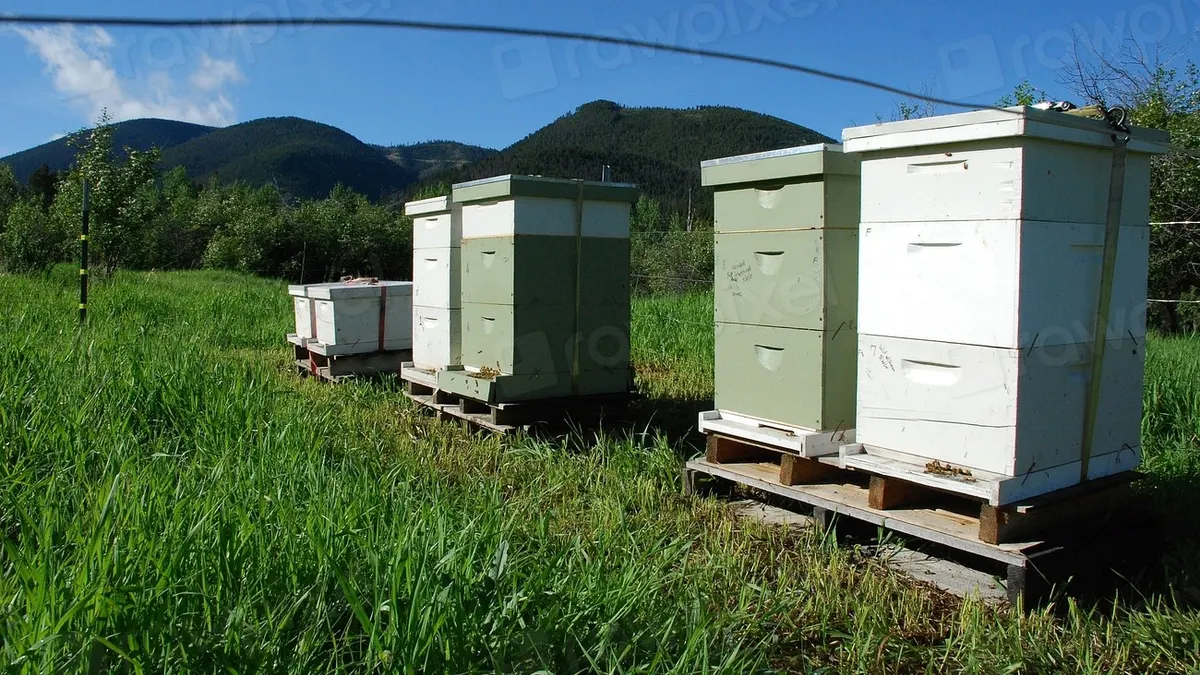
Cover photo: Apiary near Bozeman, Montana, is by U.S. Department of Agriculture, CC0 1.0, via rawpixel. Cropped.
Related guides
Beekeeping Seasonal Calendar: What to Do Each Season, From the Extension Guides
The year in five seasons from the extension guides: feeding, inspections, mite counts, supers, harvest, winter prep, and the gear for each.
Best Small Hive Beetle Traps of 2026: Oil Traps and Screened Bottom Boards
Three in-frame oil traps and two screened bottom boards, with UF/IFAS's integrated beetle management and what goes in the trap.
Best Varroa Mite Monitoring Kits and Treatments of 2026: EasyCheck and Labels
Two EasyCheck washers, the HBHC thresholds by season, and four labelled treatments with their timing, temperature and super rules.