
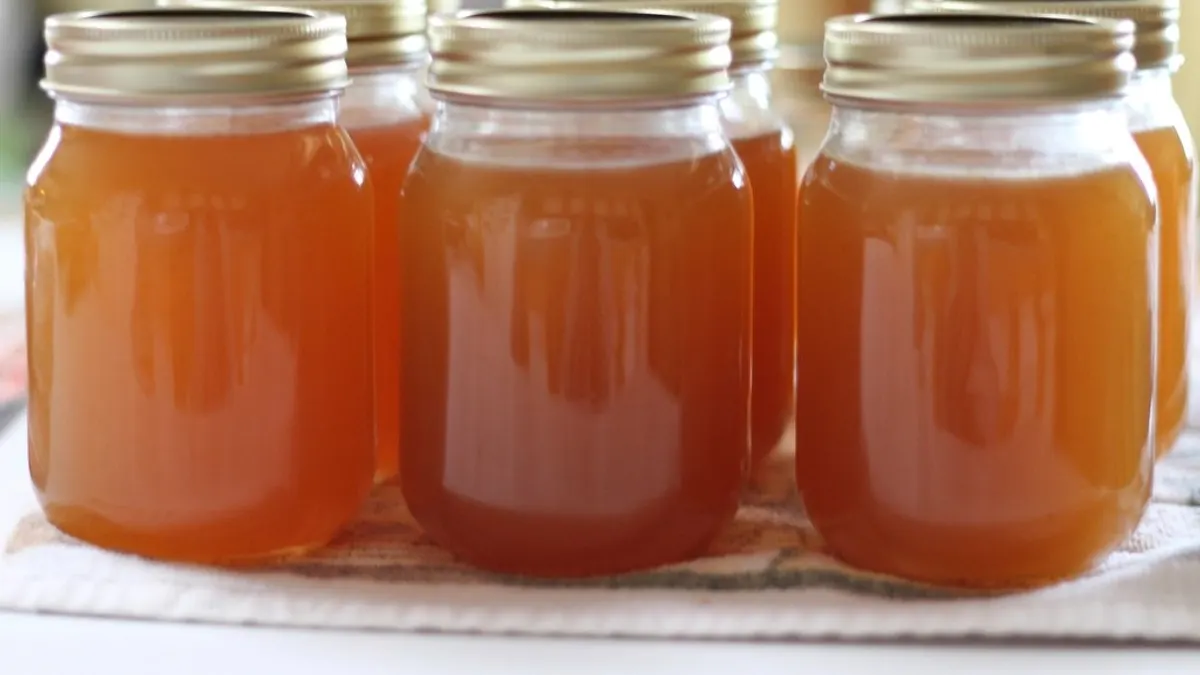
Honey Harvest Equipment Checklist: Everything You Need From the Super to the Jar
Affiliate disclosure: product links on this page go to Amazon, or to the maker's own store for brands that sell only direct. As an Amazon Associate we earn from qualifying purchases, at no extra cost to you; a link to a maker's store earns us nothing. No retailer or brand sees our picks before they are published or has any say in them. How we choose.
A first harvest needs less than the catalogues suggest: a way to get bees off the frames, a knife or fork, an extractor (yours or the club's), a sieve, a bucket with a gate and jars. This checklist runs the harvest in order and names the equipment at each step: the bee brush for clearing, the serrated knife for uncapping, the VEVOR 2/4 extractor, the VIVO double sieve and the bucket with spigot. The figures for when honey is ready come from Oregon State, Michigan State and the University of Georgia, not from the equipment.
Our top picks at a glance
1. Step 2: clearing bees
Acostop 13.8-inch Natural Horsehair Bee BrushStep: Clearing bees from the frames · Does what: Sweeps bees off each frame as it is pulled · Price: $10
2. Step 3: uncapping
Toresano 11-inch Serrated Uncapping KnifeStep: Uncapping · Does what: Removes the wax cappings so honey can leave the cells · Price: $8 (plus a $7 fork)
3. Step 4: extracting
VEVOR 2/4-Frame Manual Honey Extractor with Adjustable StandStep: Extracting · Does what: Spins honey out of the uncapped comb · Price: $110
4. Step 5: straining
VIVO Double Sieve Stainless Honey Strainer (BEE-V101H)Step: Straining · Does what: Removes wax and debris on the way from extractor to bucket · Price: $30
5. Step 6: settling and bottling
SunVara 20 L Food-Grade Honey Bucket with SpigotStep: Settling and bottling · Does what: Lets foam and fine wax rise, then fills jars from the bottom · Price: $40
| Pick | Step | Does what | Price | Buy |
|---|---|---|---|---|
| Acostop 13.8-inch Natural Horsehair Bee BrushStep 2: clearing bees | Clearing bees from the frames | Sweeps bees off each frame as it is pulled | $10 | Amazon |
| Toresano 11-inch Serrated Uncapping KnifeStep 3: uncapping | Uncapping | Removes the wax cappings so honey can leave the cells | $8 (plus a $7 fork) | Amazon |
| VEVOR 2/4-Frame Manual Honey Extractor with Adjustable StandStep 4: extracting | Extracting | Spins honey out of the uncapped comb | $110 | Amazon |
| VIVO Double Sieve Stainless Honey Strainer (BEE-V101H)Step 5: straining | Straining | Removes wax and debris on the way from extractor to bucket | $30 | Amazon |
| SunVara 20 L Food-Grade Honey Bucket with SpigotStep 6: settling and bottling | Settling and bottling | Lets foam and fine wax rise, then fills jars from the bottom | $40 | Amazon |
Step 2: clearing bees
Acostop 13.8-inch Natural Horsehair Bee Brush
A 13.8-inch horsehair brush sweeps bees off a frame without rolling them; the frame goes straight into a covered box.
- Step
- Clearing bees from the frames
- Does what
- Sweeps bees off each frame as it is pulled
- Price
- $10
- Alternative
- A bee escape board or a fume board (not reviewed here)
Pros
- Cheap and immediate
- Works on one super
- Doubles as the top-bar brush
Cons
- Slow on three supers; escape boards do it overnight
- Brushed bees get defensive; wear the suit
- Listing figures only
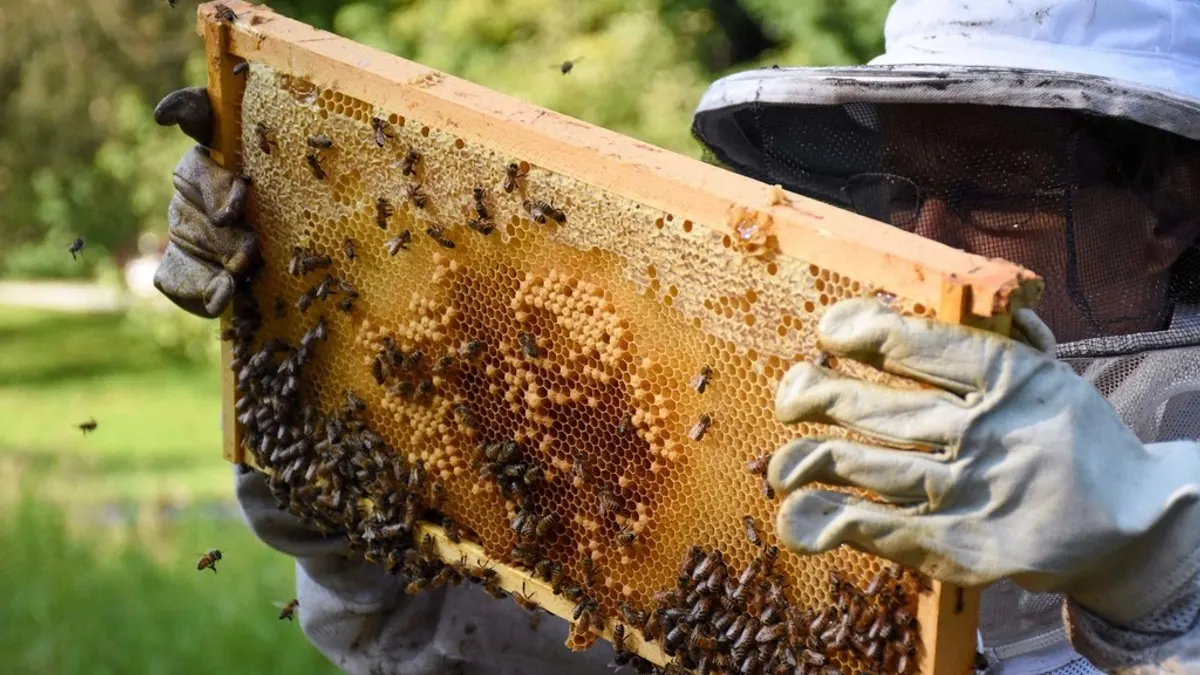
Pull each capped frame, brush the bees off in a downward stroke back into the hive, and put the frame in an empty box with a lid on it; an open box of honey frames in the yard starts robbing within minutes. The tool guide covers the brush.
Step 3: uncapping
Toresano 11-inch Serrated Uncapping Knife
An 11-inch serrated blade saws the cappings off in a sheet; a fork gets the hollows.
- Step
- Uncapping
- Does what
- Removes the wax cappings so honey can leave the cells
- Price
- $8 (plus a $7 fork)
- Alternative
- Electric knife from $176 (Mann Lake HD410) at four hives and up
Pros
- No power
- Long enough for a deep frame
- Hot water restores the glide
Cons
- Slow on cold honey
- Needs a tub under it
- Listing figures only
Uncap over a tub (a bucket with a sieve on it), resting the frame's end on a nail or the BeeCastle kit's frame holder. The uncapping guide compares knives, forks and rollers.
Step 4: extracting
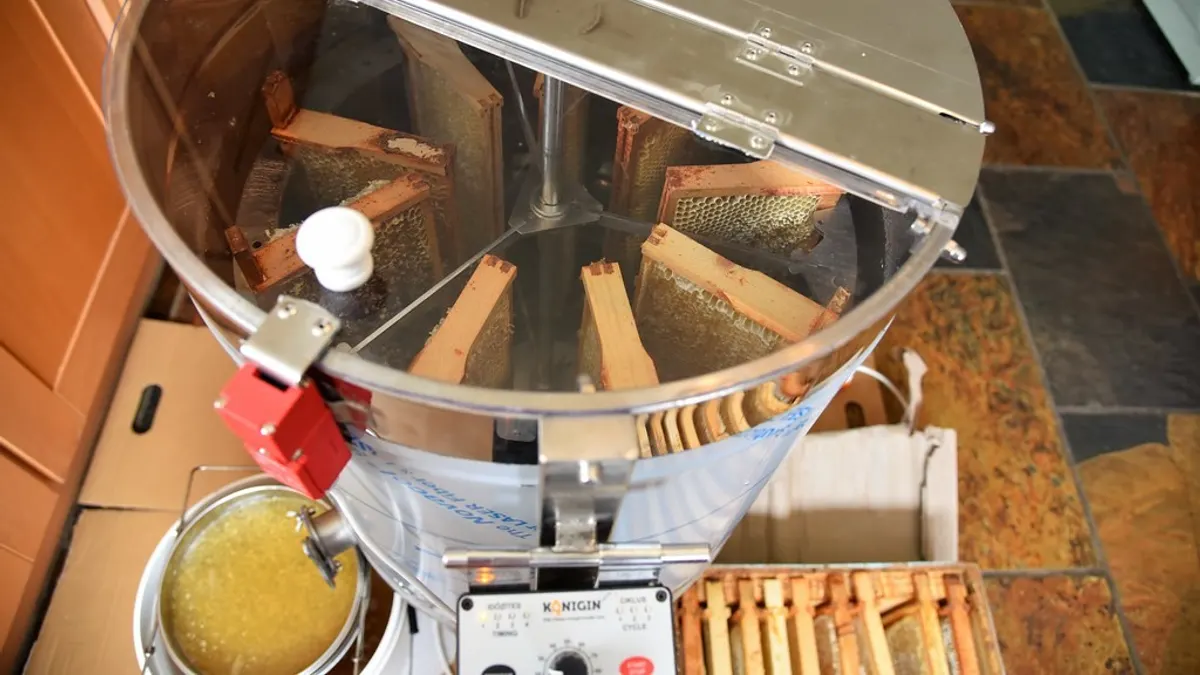
VEVOR 2/4-Frame Manual Honey Extractor with Adjustable Stand
Two deeps or four mediums a load; one to three hives in an afternoon.
- Step
- Extracting
- Does what
- Spins honey out of the uncapped comb
- Price
- $110
- Alternative
- The club's machine; an electric from $210 at four hives
Pros
- Deeps fit
- Stand lifts the gate
- Clear lid
Cons
- Flip each frame
- Two deeps a load
- Grade not stated
Spin slowly first, flip, spin fully, flip back and finish. The extractor guide has the sizing table and the electric machines.
Step 5: straining
VIVO Double Sieve Stainless Honey Strainer (BEE-V101H)
1,875 then 650 microns, over a 5-gallon bucket, catches wax and bee parts.
- Step
- Straining
- Does what
- Removes wax and debris on the way from extractor to bucket
- Price
- $30
- Alternative
- BeeCastle's 6-piece kit ($19) with a nylon bag
Pros
- Mesh stated
- Arms span the bucket
- Stainless
Cons
- Slow cold
- Wash at once
- Listing figures only
Set the sieve on the bucket under the extractor gate and open the gate. Honey through two stages is ready to settle. Strain while the honey is warm from the room.
Step 6: settling and bottling
SunVara 20 L Food-Grade Honey Bucket with Spigot
A 20-litre food-grade bucket with a gate: honey settles overnight and bottles from the spigot.
- Step
- Settling and bottling
- Does what
- Lets foam and fine wax rise, then fills jars from the bottom
- Price
- $40
- Alternative
- BeeCastle gates ($11 for two) on a food-grade bucket you own
Pros
- Gate fitted
- About 5 gallons
- Lid
Cons
- Needs a crate under it for jar clearance
- $40
- Listing figures only
Lid on, overnight at room temperature, skim the foam, then jars under the gate. Jars and lids are the one thing on this list we did not review; any canning jar with a new lid works.
Step 1: is it ready?
| Test | Figure | Source |
|---|---|---|
| Capping | At least 80 percent of the cells capped; 100 preferred | Oregon State (Ramesh Sagili) |
| Moisture | 18.6 percent is the USDA limit for extracted honey | Michigan State Extension |
| Fermentation | Under 17.1 percent will not ferment | University of Georgia |
| Instrument | A honey refractometer | Oregon State; Michigan State |
Take capped frames only. Partly capped frames stay with the bees. If a refractometer reads over 18.6 percent, the honey is for the household, not the shelf, and it should be eaten soon.
Step 2: clear the bees
Brush frame by frame into a covered box, or put an escape board under the super the day before and lift it near-empty in the morning. Either way the full box goes indoors at once. Smoke lightly; heavy smoke flavours honey.
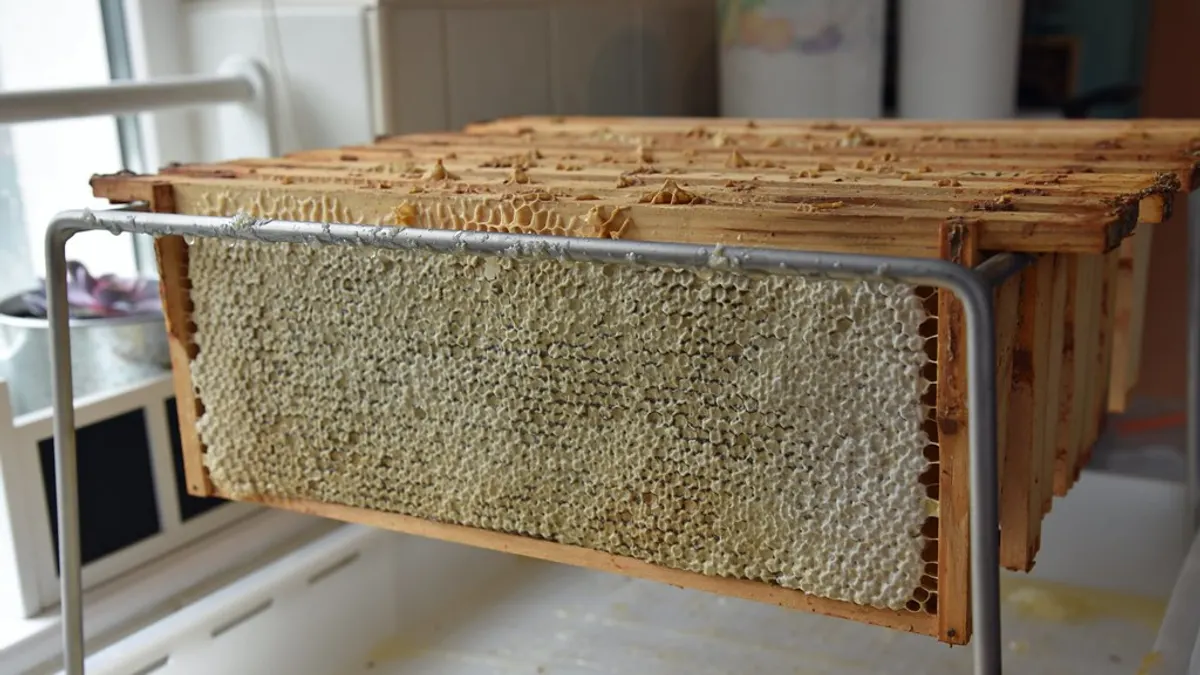
Step 3: uncap
Knife, fork or roller over a tub. Keep the cappings; they drain honey for a day and the wax is worth rendering.
Step 4: extract
Your machine or the club's. Warm room, bee-tight, floor covered. Spin gently first.
Step 5: strain
Double sieve into a bucket with a gate. Do not filter finer than the sieve; fine filtering removes pollen and is a different product.
Step 6: settle and bottle
Overnight with the lid on. Skim. Fill jars from the gate. Label with the weight and your name; the state rules for selling honey vary and are outside this guide.
Step 7: give the wet frames back
Extracted frames go back on the hive in the evening for the bees to clean, then come off dry for storage. Store supers where wax moths cannot reach them; the seasonal guide covers winter storage.
The list and the cost
| Item | Pick | Price |
|---|---|---|
| Bee brush | Acostop horsehair | $10 |
| Uncapping knife and fork | Toresano serrated; Honbay fork | $15 |
| Extractor | VEVOR 2/4 manual (or the club's) | $110 (or $0) |
| Double sieve | VIVO BEE-V101H | $30 |
| Bucket with gate | SunVara 20 L | $40 |
| Second bucket and sieve for cappings | BeeCastle gates on your own food-grade bucket | $11 |
| Refractometer | Not reviewed | |
| Jars and lids | Not reviewed | |
| Total, owning the extractor | About $216 before jars |
What to skip
Skip the extractor in year one if the club lends one. Skip uncapping tanks, bottling tanks and heated settling tanks until the harvest is measured in hundreds of pounds. And skip harvesting the colony's winter stores: UGA's minimum is 60 pounds in Georgia and UF/IFAS puts the North at about 90 pounds of honey left on the hive.
Frequently asked questions
What equipment do I need to harvest honey?
A brush or escape board, an uncapping knife or fork, an extractor (yours or the club's), a double sieve, a food-grade bucket with a gate, and jars. Our picks total about $216 owning the extractor, $106 without it.
How do I know honey is ready to harvest?
Frames at least 80 percent capped (Oregon State, better 100) and a refractometer reading at or under 18.6 percent moisture (the USDA limit, per Michigan State); UGA says under 17.1 percent will not ferment.
How much honey should I leave for the bees?
UGA's minimum is 60 pounds of stores in Georgia; UF/IFAS puts the North at about 90 pounds of honey. Harvest only the surplus above that.
Do I need a refractometer?
If you will sell or store honey, yes; it is the only way to know the moisture figure the sources above give. We did not review one.
Can I harvest without an extractor?
Yes, by crush and strain: cut the comb into a sieve over a bucket and let it drain. The comb is lost and the yield lower, which is why Langstroth beekeepers borrow or buy an extractor.
What do I do with the frames after extracting?
Put them back on the hive in the evening for the bees to clean, then store them dry where wax moths cannot reach them.
Sources
- When to harvest honey (Ramesh Sagili), Oregon State University Extension
- Honey harvest: moisture content, Michigan State University Extension
- Honey Harvesting and Processing (Honey Bee Program), University of Georgia Honey Bee Program
- Feeding Honey Bees, University of Georgia Honey Bee Program
- Welcome to the Apiary! Honey Bee 4-H Project Book (4H446), UF/IFAS Extension
Related guides
Best Electric Honey Extractors of 2026: 2/4-Frame to 8-Frame Motorized Machines
Four motorized extractors compared on frames, motor and speed control, drum size, gate height, weight and price.
Best Honey Extractors of 2026: Manual and Electric, 2-Frame to 8-Frame
Seven extractors from 2-frame hand crank to 8-frame electric, compared on capacity, drive, drum, steel and price, with when honey is ready.
Best Manual Honey Extractors of 2026: 2-Frame and 3-Frame Hand-Crank Machines
Five hand-crank extractors compared on frames, drum, steel, stand and price, with Dadant's bench machines for reference.