
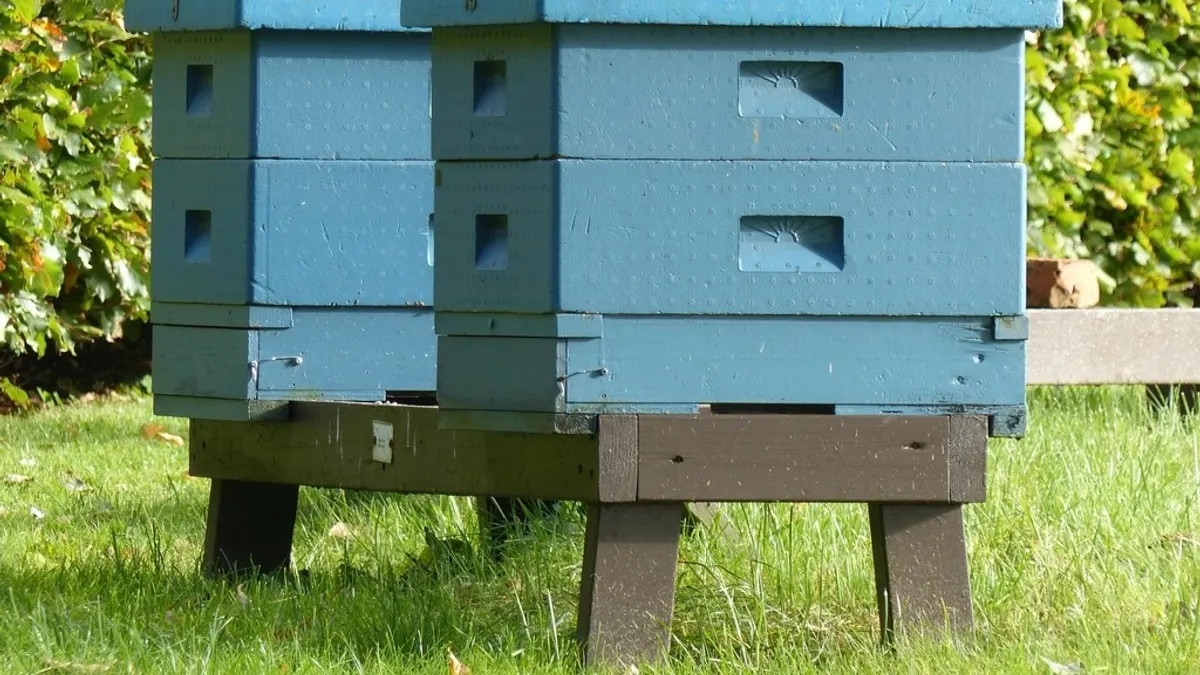
Beehive Wood and Coating Guide: Pine, Cedar, Beeswax Dip, Paint and Polystyrene
Affiliate disclosure: product links on this page go to Amazon, or to the maker's own store for brands that sell only direct. As an Amazon Associate we earn from qualifying purchases, at no extra cost to you; a link to a maker's store earns us nothing. No retailer or brand sees our picks before they are published or has any say in them. How we choose.
A beehive box is softwood left outdoors for a decade, so the finish decides how long it lasts. There are four ways it arrives: raw pine to paint (Mann Lake, Dadant, Galena Farms, Betterbee), dipped or coated in beeswax (Hoover Hives, BeeCastle, Honey Lake, MayBee), cedar with or without a coating, and polystyrene. This guide is what the suppliers' own painting pages and the extension sources say about each: what to paint, what never to paint, what a low-VOC exterior latex is, how long painted woodenware lasts (Oregon State's survey: about ten years) and what polystyrene's R-value buys in a cold state.
Our top picks at a glance
1. Beeswax-dipped example
Hoover Hives Gold Standard 10-Frame Beehive Kit (2 deeps, 1 medium, beeswax dipped)Finish: Dipped in natural beeswax (Hoover) · Work before the bees: Assembly only · Price: About $155
2. Raw pine example
Galena Farms Busy Bees 'N' More 10-Frame Kit (2 deeps, 1 medium)Finish: Unpainted eastern white pine (Galena Farms) · Work before the bees: Assembly, two coats of exterior latex outside, cure · Price: $199
3. Polystyrene example
Betterbee Basic BeeMax Polystyrene Beginner KitFinish: Polystyrene, painted by you (Betterbee) · Work before the bees: Assembly and exterior latex · Price: $267 as a beginner kit with tools
| Pick | Finish | Work before the bees | Price | Buy |
|---|---|---|---|---|
| Hoover Hives Gold Standard 10-Frame Beehive Kit (2 deeps, 1 medium, beeswax dipped)Beeswax-dipped example | Dipped in natural beeswax (Hoover) | Assembly only | About $155 | Amazon |
| Galena Farms Busy Bees 'N' More 10-Frame Kit (2 deeps, 1 medium)Raw pine example | Unpainted eastern white pine (Galena Farms) | Assembly, two coats of exterior latex outside, cure | $199 | Galena Farms |
| Betterbee Basic BeeMax Polystyrene Beginner KitPolystyrene example | Polystyrene, painted by you (Betterbee) | Assembly and exterior latex | $267 as a beginner kit with tools | Betterbee |
Beeswax-dipped example
Hoover Hives Gold Standard 10-Frame Beehive Kit (2 deeps, 1 medium, beeswax dipped)
Hoover dips every wooden part in natural beeswax after cutting, so the kit goes out the day it is screwed together.
- Finish
- Dipped in natural beeswax (Hoover)
- Work before the bees
- Assembly only
- Price
- About $155
- Wood
- Fir bottom board stated; box species not stated (Hoover)
Pros
- No paint, no cure
- Wax penetrates end grain where paint fails first
- Standard dimensions published
Cons
- Hoover does not state the box species
- A dipped box can be repainted later but the wax must be scuffed
- No warranty term
Hoover's page states that every wooden part is dipped in natural beeswax after cutting. BeeCastle describes its boxes as fully soaked in boiled beeswax so the wax penetrates; MayBee and Honey Lake describe theirs as heavy wax coated. The difference between dipping and brushing is penetration at the end grain and the joints, the places Betterbee's painting guide says to coat with care. None of these makers states a lifespan figure, and we have not found an extension source that compares dipped to painted boxes over years, so treat the ten-year figure below as the painted-wood figure only.
Raw pine example
Galena Farms Busy Bees 'N' More 10-Frame Kit (2 deeps, 1 medium)
Galena Farms' Amish-made eastern white pine kit arrives unpainted: the standard supplier finish, and the one that needs a weekend.
- Finish
- Unpainted eastern white pine (Galena Farms)
- Work before the bees
- Assembly, two coats of exterior latex outside, cure
- Price
- $199
- Wood
- Eastern white pine (Galena Farms)
Pros
- Species named
- Paint any colour; Betterbee's guide says light colours reflect summer heat
- Aluminum-capped cover included
Cons
- Painting and a cure of a week or more before the bees (Betterbee)
- Unassembled
- Sold direct
Galena Farms names eastern white pine for its Busy Bees line; Mann Lake, Dadant and Betterbee sell pine without stating the species. Betterbee's guide: a water-based exterior latex with VOC under 100 g/L (under 50 better), on the outside surfaces and the edges where boxes meet, never the inside, never the frames, never the inner cover; Mann Lake's painting tips agree and add that the entrance reducer and inner cover in its kits ship unpainted. Oregon State's equipment fact sheet gives painted woodenware a life of about ten years.
Polystyrene example
Betterbee Basic BeeMax Polystyrene Beginner Kit
Betterbee's BeeMax polystyrene hive rates R 6.5 against about R 1.2 for wood, and it is painted too.
- Finish
- Polystyrene, painted by you (Betterbee)
- Work before the bees
- Assembly and exterior latex
- Price
- $267 as a beginner kit with tools
- Wood
- None; expanded polystyrene, R-value 6.5 (Betterbee)
Pros
- Five times the insulation of wood by Betterbee's figures
- Light
- Does not rot
Cons
- Must be painted (UV)
- Bees chew exposed edges
- BeeMax stacks with BeeMax
Betterbee's polystyrene page gives the BeeMax an R-value of 6.5 and, in its article on why to choose polystyrene, puts a wooden hive at around R 1.2 and polystyrene at around R 6. Polystyrene still gets painted: it is the paint that protects the foam from sunlight. The case is winter in the northern tier; the seasonal guide covers wrapping wooden hives as the alternative.
What gets painted and what never does
Betterbee's painting guide and UF/IFAS's 4-H project book say the same thing: paint the outside of the boxes, the outside of the covers and the bottom board, and the edges where boxes meet. Never paint the inside of a box, the frames, the inner cover or anything the bees walk on; the bees coat the inside with propolis themselves. Mann Lake's painting tips follow the same rule and note that its kits' entrance reducers and inner covers ship unpainted on purpose.
Which paint
Betterbee: a water-based exterior latex, low VOC (under 100 grams per litre; under 50 is better), two coats, and a cure before the bees go in, which it puts at a week to a month depending on the paint and weather. Light colours reflect summer heat; dark colours absorb it, which some northern beekeepers want. Mann Lake adds that primer helps on bare pine. Oil-based paints and stains are allowed on the outside once fully cured; the VOC rule is about what the bees breathe, and it is why the inside is never painted at all.
Beeswax dip and coating
Hoover dips every part in natural beeswax after cutting; BeeCastle soaks boxes in boiled beeswax; MayBee and Honey Lake describe heavy wax coating. A dipped box is ready when it is assembled. What the makers do not publish is a lifespan, and we have not found an extension comparison of dipped and painted boxes, so the honest statement is: dipped saves the painting, painted has a ten-year figure behind it (Oregon State PNW 744), and a dipped box can be scuffed and painted later if it starts to weather. Commercial wax dipping (paraffin and rosin at high temperature) is a different process and not what the Amazon kits describe.
Wood species
| Wood | Who states it | Notes |
|---|---|---|
| Eastern white pine | Galena Farms (Busy Bees) | The supplier standard; light, takes paint, needs it |
| Pine, species not stated | Mann Lake, Dadant, Betterbee | Mann Lake sells commercial and budget grades by knot count |
| Cedar | BeeCastle, Honey Lake, MayBee (listings); Bee Built (top bar) | Naturally rot resistant; the listings pair it with beeswax coating |
| Fir | Hoover (bottom board) | Hoover states fir for the bottom board only |
| Polystyrene | Betterbee (BeeMax) | R 6.5; painted; its own system |
How long woodenware lasts
Oregon State's PNW 744 puts the useful life of painted woodenware at about ten years in its cost tables, with frames and foundation replaced on a shorter cycle. The bottom board goes first because it sits closest to the ground; a stand that lifts the hive (Betterbee: at least 12 inches) is as much a woodenware investment as a skunk measure. The stand guide covers it.
Insulation
Betterbee's figures are the only maker-stated ones we have: wood around R 1.2, polystyrene around R 6 to 6.5. Penn State's seasonal guidance has the colony eating stores through winter and the beekeeper adding fondant; a better-insulated hive eats less, but the extension sources we read do not put a number on the saving, so neither do we. Wrapping a wooden hive is the common northern alternative.
Assembly notes
Every unassembled kit here uses dovetail or box joints with glue and nails or screws. Paint after assembly so the joints are sealed. Frames are nailed with the foundation in; never paint them. The hive kit guide lists which kits arrive assembled.
Frequently asked questions
Do I need to paint a beeswax-coated beehive?
No. Hoover, BeeCastle, Honey Lake and MayBee ship boxes dipped or coated in beeswax so they go out as assembled. They can be scuffed and painted later if they weather.
What paint is safe for beehives?
A water-based exterior latex with low VOC (Betterbee: under 100 g/L, under 50 better), on the outside only, cured before the bees arrive. The inside, frames and inner cover are never painted (Betterbee, UF/IFAS 4-H manual).
How long does a painted beehive last?
Oregon State Extension's equipment cost sheet (PNW 744) uses about ten years for painted woodenware. Bottom boards go first; a stand that lifts the hive helps.
Is cedar better than pine for beehives?
Cedar resists rot without paint; pine is lighter on the wallet and takes paint well. The Amazon cedar kits (BeeCastle, Honey Lake, MayBee) are also wax coated, so the cedar is a second layer of protection rather than the only one.
Is a polystyrene hive worth it?
In a cold state, Betterbee's R 6.5 against about R 1.2 for wood is a real difference. It must still be painted against UV, bees chew exposed edges, and BeeMax parts stack with BeeMax.
Can I paint the inside of the hive?
No. The suppliers' guides and the UF/IFAS 4-H manual say outside surfaces only; the bees propolize the inside themselves and paint fumes inside the hive are the one thing the low-VOC rule exists to avoid.
Sources
- How To Paint Bee Boxes, Betterbee
- Why Would You Put Bees in a Polystyrene Hive?, Betterbee
- Tips For Painting Hives The Right Way, Mann Lake
- The Gold Standard (10 Frame), Hoover Hives
- 10-Frame Complete Beehive Kit (Busy Bees 'N' More), Galena Farms
- Welcome to the Apiary! Honey Bee 4-H Project Book (4H446), UF/IFAS Extension
- Beekeeping Equipment Expenses: Woodenware and Other Components (PNW 744), Oregon State University Extension
- Seasonal Beekeeping Guide, Penn State Extension
Cover photo: Wooden hives lawn, CC0 1.0, via rawpixel. Cropped.
Related guides
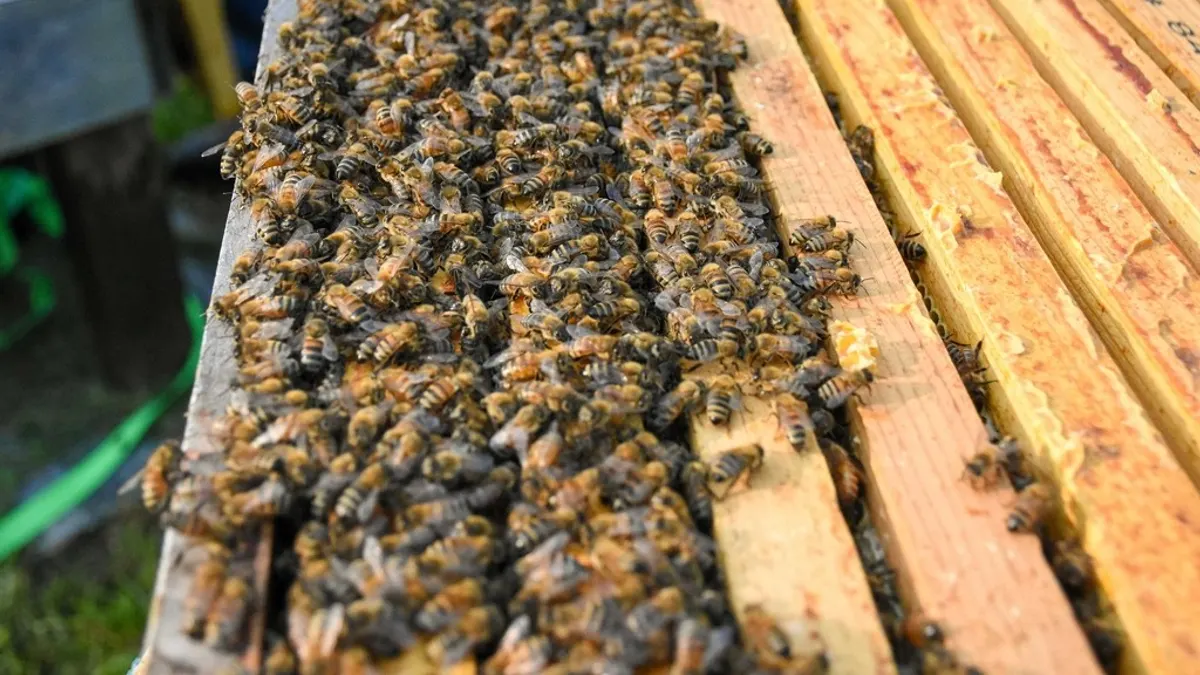
8-Frame vs 10-Frame Langstroth: Weight, Cost, Compatibility and Which to Buy
Dimensions, weight when full, cost and compatibility, from Oregon State, Mann Lake, Betterbee and Hoover, so you pick one width and never mix them.
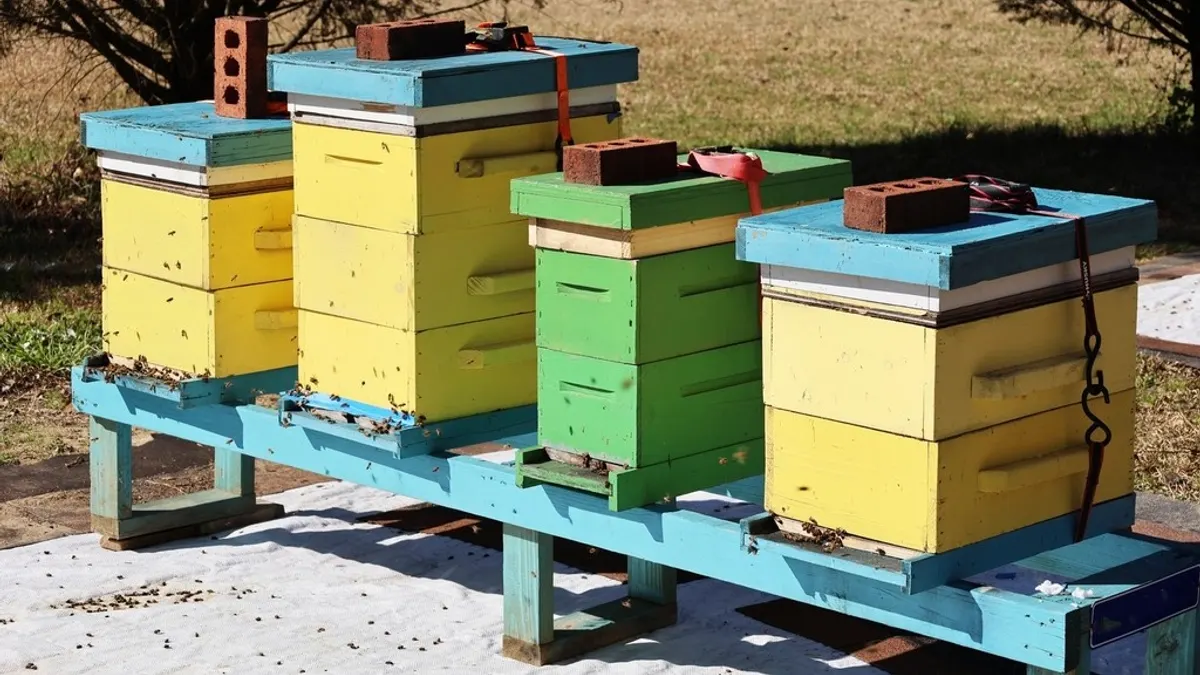
Best Beehives for Beginners (2026): Langstroth Woodenware for a First Colony
Seven Langstroth hives for a first colony, compared on boxes and frames included, finish, dimensions and what the extension guides say a beginner needs.
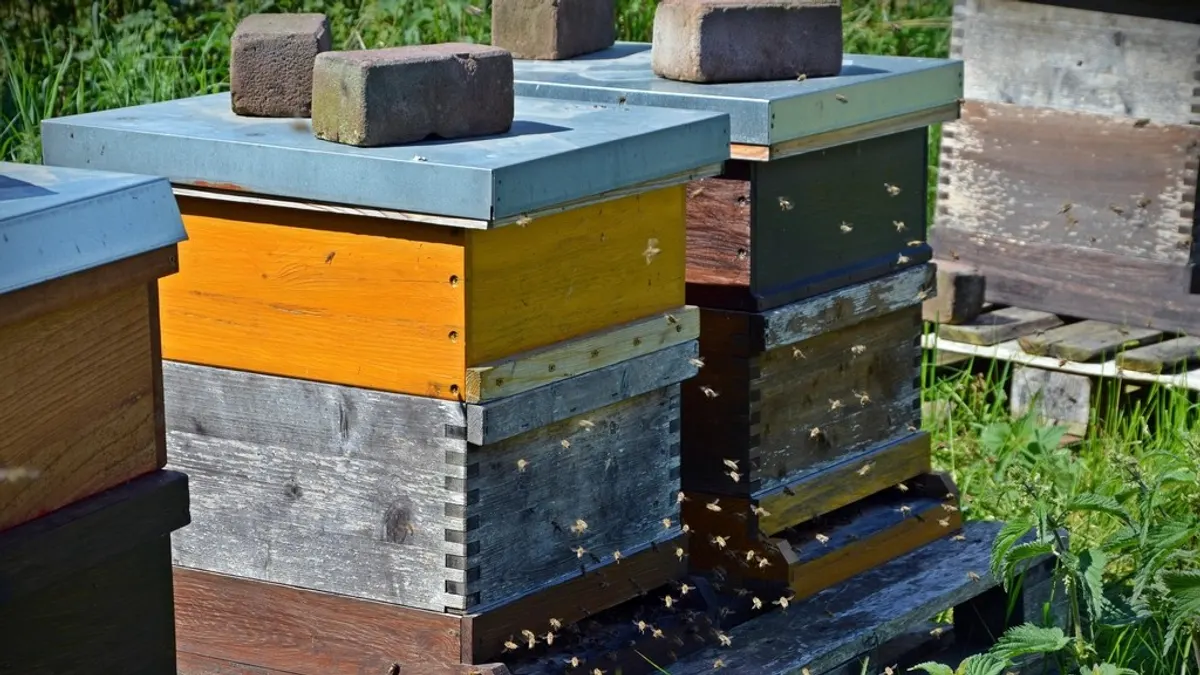
Best Beekeeping Starter Kits of 2026: What Each Box Holds and What It Leaves Out
Six kits from Hoover, Honey Lake, Mann Lake, Dadant and Betterbee, compared on what is in the box, what is not, assembly and price.