
Parts of a Beehive Explained: Every Langstroth Part, Bottom to Top
Affiliate disclosure: product links on this page go to Amazon or to the maker's own store. As an Amazon Associate we earn from qualifying purchases, and VEVOR pays us a commission on sales through our VEVOR links, at no extra cost to you; links to other makers' stores earn us nothing. No retailer or brand sees our picks before they are published or has any say in them. How we choose.
A Langstroth beehive, the type most beekeepers use, has nine parts from the ground up: a hive stand, a bottom board, an entrance reducer, one or two brood boxes, frames with foundation, an optional queen excluder, honey supers, an inner cover and an outer cover. That is the list in the equipment guide from the Mid-Atlantic Apiculture Research and Extension Consortium (MAAREC) and in Mann Lake's component chart. The boxes, frames, bottom board and two covers are the parts you can't do without; the stand and the excluder are optional, and the entrance reducer matters most while a colony is small.
This guide goes through each part from the bottom up, then the box and frame sizes (deep, medium and shallow), what a super is, why the sizes are fixed (bee space), and where the bees put brood and honey inside. It includes a real kit's parts list, so you can see which pieces come in the box and which you buy later.
The parts of a beehive, bottom to top
| Part | What it does | Do you need it? |
|---|---|---|
| Hive stand | Lifts the hive off the ground: less damp, a longer-lasting bottom board, no grass in the entrance | Optional; concrete blocks work |
| Bottom board | The floor of the hive and the bees' landing platform; solid or screened | Yes |
| Entrance reducer | A notched strip that shrinks the entrance so a small colony has less to guard | For a new or weak colony |
| Brood boxes (hive bodies) | Where the queen lays and the colony raises its young; usually deeps | Yes, one or two |
| Frames and foundation | Hang inside every box and hold the comb | Yes, 10 per box (8 in an 8-frame box) |
| Queen excluder | A grid workers fit through and the queen doesn't, so no brood ends up in the honey | Optional |
| Honey supers | Boxes above the brood where the bees store the surplus honey you harvest | Once the brood boxes fill |
| Inner cover | Stops the bees gluing the roof down and leaves an insulating air space | Yes, under a telescoping cover |
| Outer cover | The roof: telescoping (overhangs, metal top) or migratory (flush, stackable) | Yes |
Hive stand
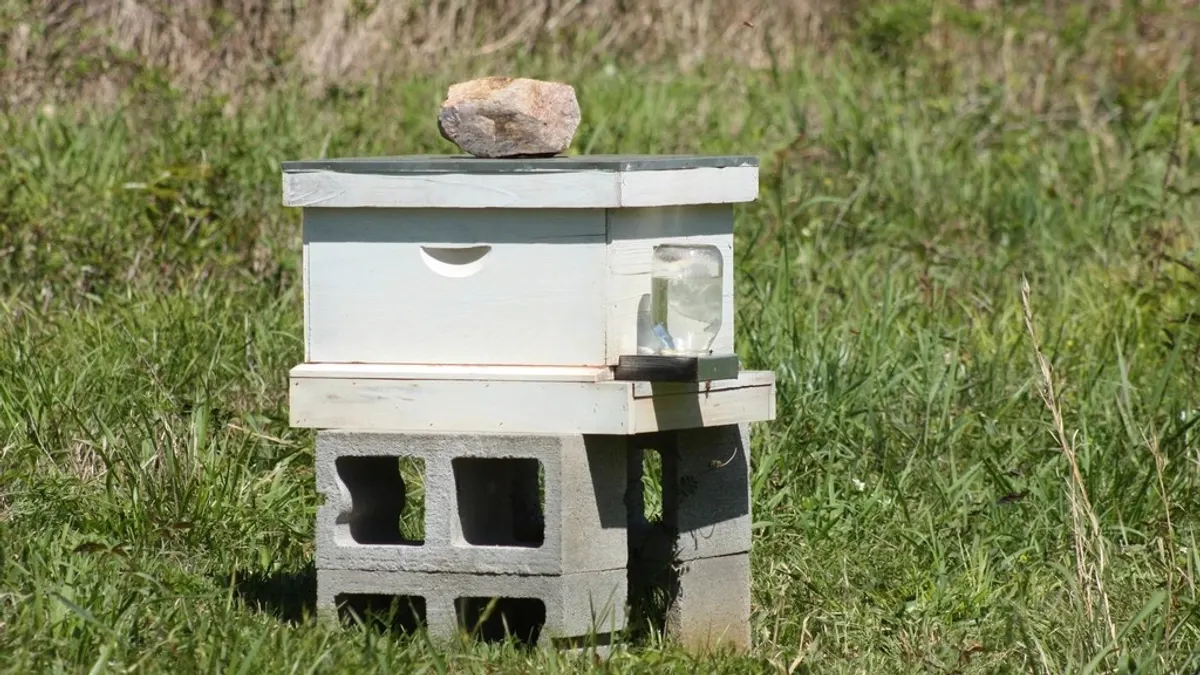
MAAREC calls the stand optional but lists what it does: it lifts the bottom board off the ground, which reduces dampness in the hive, makes the board last longer and keeps grass and weeds out of the entrance. Concrete blocks, bricks, railroad ties, pallets, logs and bought stands all work, and one stand can hold a single hive or a row. Our hive stand guide compares the bought ones.
Bottom board
The bottom board is the floor of the colony and the takeoff and landing platform for foragers. It is open at the front, so MAAREC says to tilt the hive forward slightly to keep rain from running in, and notes that many boards are reversible, giving either a 7/8-inch or a 3/8-inch entrance. Boards come solid or screened. Texas A&M's ENTO-100 says a screened board adds airflow in hot months and lets some pests fall out of the hive, and usually comes with an insert to close it in cold months.
The Honey Lake screened bottom board is 16 1/4 inches wide to match a 10-frame box, with a removable metal insert and an entrance reducer (per the Amazon listing).
Entrance reducer
Texas A&M calls the reducer important for young or weak hives, because it cuts down the space the bees have to guard; straw or bits of wood do the same job. When the bees are very active or the weather is hot, enlarge the entrance or take the reducer out. ENTO-100 also says to set it with the open notch facing down, so water can run out and the bees can carry out their dead.
Brood boxes (hive bodies)
The boxes at the bottom of the stack are the brood chamber, where the queen lays. Mann Lake's component chart calls the 9 5/8-inch deep box the hive body. According to MAAREC, a single deep is the usual start for a package or a new nuc, and most beekeepers then run two deeps, or a deep and a shallow, for the brood area. Oregon State Extension's PNW 744 gives two deeps or a deep and a medium as the main setups, and notes a trend among small-scale beekeepers toward three mediums, which costs more in woodenware per colony. MAAREC describes the same idea with three shallows for beekeepers who want to avoid heavy deeps, at the price of thirty frames to assemble instead of twenty.
Texas A&M's rule for adding a box: wait until the bees have drawn comb on 8 of the 10 frames. Too much space is more to guard and heat, and too little can send them looking for a bigger home.
Frames and foundation
Each frame is a top bar, two end bars and a bottom bar (Mann Lake, MAAREC). The ends of the top bar hang on ledges cut into the ends of the box, so the frames hang free with a gap all round. Foundation is a sheet of beeswax or plastic stamped with the hexagon pattern, so the bees build straight comb inside the frame. MAAREC notes that plastic frames and foundation are increasingly popular, and that wax foundation in a wooden frame needs pins or wires to hold it.
Frames come in heights to match each box (table below). Texas A&M warns not to put medium frames in a deep box: the bees fill the extra space underneath with burr comb. Our beehive frames and foundation guide compares one-piece plastic, wooden and beeswax frames.
Queen excluder
An excluder is a sheet of perforated metal or plastic, or a welded wire grid, with gaps workers pass through but the queen cannot. It goes between the brood boxes and the honey supers, so the queen doesn't lay in the honey. MAAREC calls it optional and says fewer than half of beekeepers use one. Some call it a "honey excluder," because workers can be slow to cross it into empty supers.
MAAREC's advice: let the bees start storing nectar in a super before you put the excluder under it, and never put a super of bare foundation above an excluder. Texas A&M recommends one if you are keeping bees for honey. The Mann Lake wood-bound metal excluder fits a 10-frame box. Our queen excluder guide compares wood-bound, metal and plastic excluders and covers when to put one on and take it off.
Inner cover
The inner cover sits on the top box, under the outer cover. MAAREC lists four jobs: it stops the bees gluing the outer cover down with propolis and wax, leaves an air space under the roof for insulation, shades the inside from summer sun, and keeps moist winter air off cold surfaces. Its center hole takes a Porter bee escape for clearing bees out of honey supers. Texas A&M calls the inner cover essential under a telescoping cover; without it, the bees glue the roof on.
Outer cover
A telescoping cover fits over the inner cover and the top edge of the box, and its top is usually covered in metal to shed rain (Mann Lake's is aluminum). A migratory cover is one flat piece that sits flush with the sides, so hives can be packed tightly on a truck; MAAREC and Texas A&M both describe it as the choice of beekeepers who move hives. With an inner cover in place, MAAREC notes, you can lift the outer cover and smoke the bees while disturbing very few of them.
Box and frame sizes
| Box | Box height | Frame height | Full of honey | Usual job |
|---|---|---|---|---|
| Deep (hive body) | 9 5/8 in | 9 1/8 in | Over 60 lb (MAAREC) | Brood |
| Medium (also called Illinois, Dadant or western) | 6 5/8 in | 6 1/4 in | Between the two | Honey supers, or brood in an all-medium hive |
| Shallow | 5 5/8 in (Mann Lake) to 5 11/16 in (MAAREC) | 5 3/8 in | About 35 lb (MAAREC) | Honey supers |
| Section comb super | 4 5/8 in | Holds comb honey sections, not standard frames | Comb honey; MAAREC says not for beginners |
A 10-frame box is 16 1/4 by 19 7/8 inches outside, and an 8-frame box is 14 by 19 7/8 inches. Mann Lake says width is the only difference, but adds that 8-frame equipment isn't always compatible between makers because dimensions vary slightly. Our 8-frame vs 10-frame guide covers the trade-off in weight. MAAREC also mentions a 7 5/8-inch box that some beekeepers prefer, mostly those who build their own.
Here is a real kit, part by part. Hoover Hives lists these dimensions for its Gold Standard 10-frame kit:
| Part | Quantity | Size (Hoover's figures) |
|---|---|---|
| Telescoping top cover, capped with galvanized steel | 1 | 18 1/2 x 22 x 2 7/8 in |
| Inner cover | 1 | 16 1/4 x 19 7/8 x 3/4 in |
| Medium super | 1 | 16 1/4 x 19 7/8 x 6 5/8 in |
| Medium frames, with foundation | 10 | 19 x 6 1/4 in |
| Deep brood boxes | 2 | 16 1/4 x 19 7/8 x 9 5/8 in |
| Deep frames, with foundation | 20 | 19 x 9 1/8 in |
| Solid bottom board | 1 | 16 1/4 x 22 x 2 9/16 in |
| Entrance reducer | 1 | 14 5/8 in long |
That covers everything in the first table except the stand and the excluder, which are the two optional parts. Our Langstroth hive kit guide compares kits by what they include.
What is a super?
A super is any box placed on top of the brood box. Texas A&M's ENTO-100 says boxes set on the brood box are generally called supers whatever their size, and the Texas Master Beekeeper Program's equipment notes add that supers are named for what they hold: a honey super collects honey, and a brood super (or brood chamber) is where the queen lays. So a "medium super" is a medium box, and a "honey super" is whichever box the bees fill with honey for you.
MAAREC calls the medium the most convenient size for honey supers, because a deep full of honey weighs over 60 pounds. A medium with its frames is the box you will buy most often once the colony grows. The MayBee 10-frame medium super comes with 10 frames and beeswax-coated plastic foundation, unassembled (per the Amazon listing).
Bee space: why the sizes are fixed
Lorenzo Langstroth patented his movable-frame hive in 1852 (US Patent 9,300), and it works because of bee space. Texas A&M defines bee space as a gap larger than 6 millimeters and smaller than 9 (roughly 1/4 to 3/8 inch). Bees leave a gap that size open as a walkway. A bigger gap gets filled with burr comb, and a smaller one gets sealed with propolis. The Texas Master Beekeeper notes put the Langstroth's gap between frames and the other parts at 3/8 inch.
That gap between frames, walls and boxes is why Langstroth frames lift out instead of being glued in. It is also why sizes can't be mixed freely: MAAREC says homemade or used equipment must be standard size, and a frame that is too short for its box leaves a gap the bees fill with comb.
Inside the hive: where the bees put things
The University of Tennessee's W 1151 describes the usual layout: brood toward the center of the frames, a ring of pollen around it, and nectar and honey along the edges, in the outer frames and in the supers above. That is why the brood boxes sit at the bottom and the honey supers on top. When the bees start packing pollen or nectar into cells inside the brood nest, the colony needs more room. Our hive inspection guide covers what to check on each frame.
Extras you may add
A feeder is the most common addition: Mann Lake's component chart shows a frame feeder that takes the place of one or two frames, and a top feeder sits on the boxes like a super (our bee feeder guide compares the types). MAAREC mentions slatted bottom boards and English-style covers as other options some beekeepers like. Whatever you add, paint only the outside: MAAREC says not to paint the inside of the hive, because the bees coat it with propolis themselves, and our wood and coating guide covers paint and wax-dipped boxes.
Frequently asked questions
What are the parts of a beehive?
From the bottom up, a Langstroth hive has a hive stand, a bottom board, an entrance reducer, one or two brood boxes, frames with foundation, an optional queen excluder, honey supers, an inner cover and an outer cover. The stand and the excluder are optional; the rest come in a standard kit or are needed soon after.
What is a super on a beehive?
Any box placed on top of the brood box. Supers are named for what they hold: a honey super is where the bees store the honey you harvest, and a brood super is where the queen lays. Mediums are the usual honey super because a deep full of honey weighs over 60 pounds.
What is the difference between a deep and a medium hive box?
Height. A deep is 9 5/8 inches tall and takes 9 1/8-inch frames; a medium is 6 5/8 inches tall and takes 6 1/4-inch frames. Both are 16 1/4 by 19 7/8 inches outside in the 10-frame width. Deeps usually hold brood and mediums usually hold honey, though some beekeepers run all mediums to keep boxes lighter.
Do you need a queen excluder?
No. MAAREC calls it optional and says fewer than half of beekeepers use one. If you use one, let the bees start storing nectar in the super first, and never put a super of bare foundation above it.
What does the inner cover do on a beehive?
It stops the bees gluing the outer cover down, leaves an insulating air space under the roof, shades the hive in summer and keeps moist air off cold surfaces in winter. Its center hole can hold a bee escape for clearing bees out of honey supers.
What is bee space?
The gap bees leave open as a walkway, larger than 6 mm and smaller than 9 mm (about 1/4 to 3/8 inch). Bees fill a bigger gap with comb and seal a smaller one with propolis. Langstroth hives keep that gap around every frame, which is why the frames lift out.
How many boxes does a beehive need?
A package or nuc usually starts in one deep. Most beekeepers then run two deeps, or a deep and a shallow or medium, for brood, and add honey supers as the bees fill the boxes below. Texas A&M's rule is to add a box once the bees have drawn comb on 8 of the 10 frames.
Sources
- Beekeeping Equipment, Mid-Atlantic Apiculture Research and Extension Consortium (MAAREC)
- Beekeeping Equipment: Hive Boxes (ENTO-100), Texas A&M AgriLife Extension
- Beekeeping Equipment, Texas Master Beekeeper Program, Texas A&M
- The Langstroth Hive Components, Mann Lake
- 10 Frame Assembled 9 5/8 inch Commercial Grade Deep Hive Box, Mann Lake
- 10 Frame 5 5/8 inch Unassembled Shallow Super, Commercial Grade, Mann Lake
- Hoover Hives Gold Standard 10-frame kit (figures from Hoover's own page; this link goes to the same kit at Galena Farms, which sells Hoover's hives), Hoover Hives
- PNW 744 (Langstroth colony configurations and equipment costs), Oregon State University Extension
- Honey Bee Inspections and Recordkeeping (W 1151), University of Tennessee Extension
- US Patent 9,300: Beehive (L. L. Langstroth, 1852), US Patent Office, via Google Patents
Cover photo: Bee Hive Box, CC0 1.0, via rawpixel. Cropped.
Related guides
Best Top Bar Beehives of 2026, and Who Should Skip One
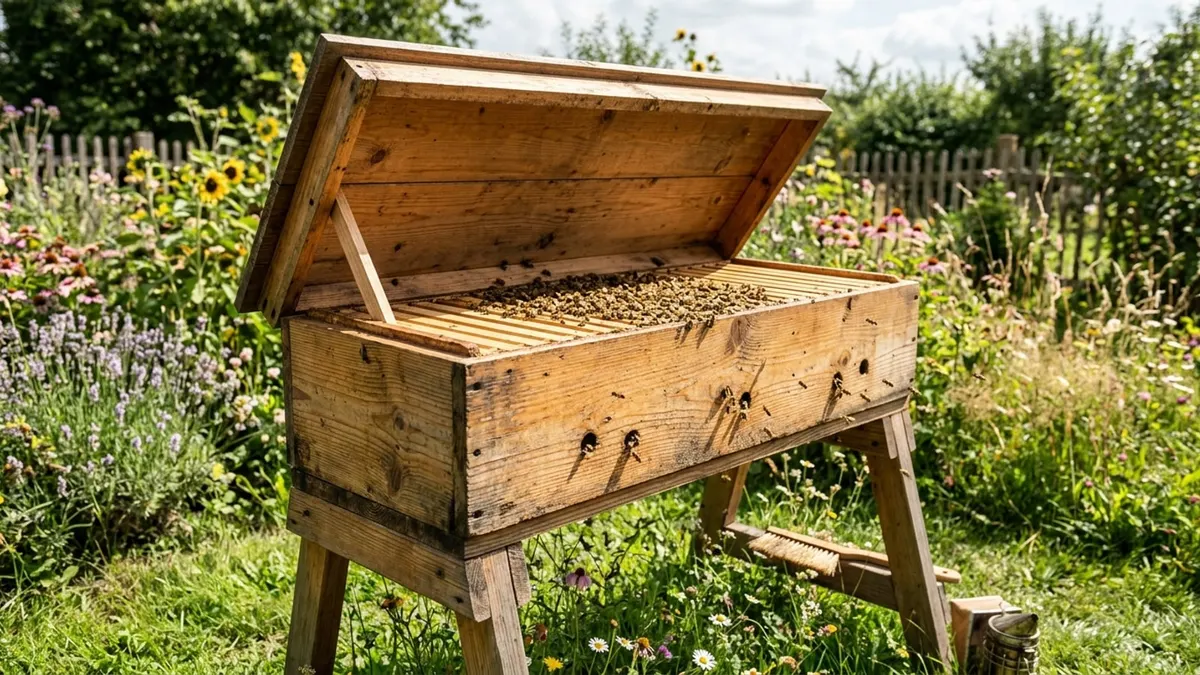
Bee Mindful's 20-inch-bar double hive is the pick. Five top bar hives compared on bars, walls, assembly and full price, plus who should skip one.
Best Queen Excluders of 2026, and Whether You Need One
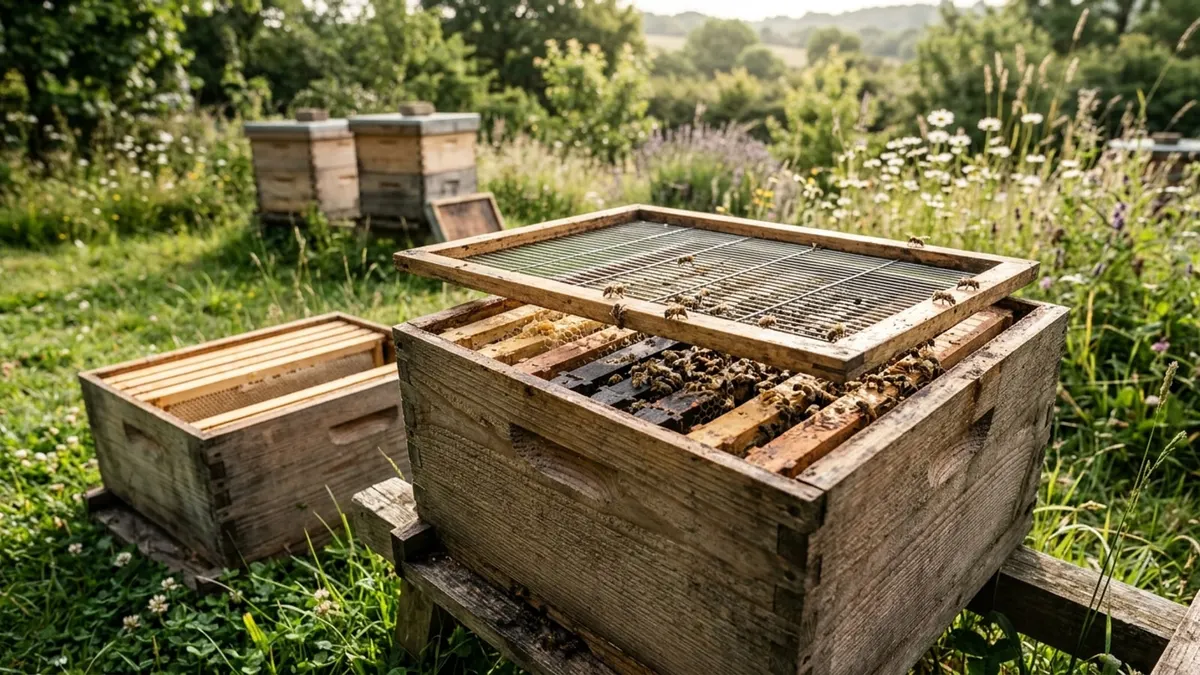
An excluder is optional. If you use one, a wood-bound metal grid is the pick. Four excluders compared, plus when to add one and why it comes off for winter.
Best Swarm Traps of 2026: Bait Hives, Lures and Where to Hang Them
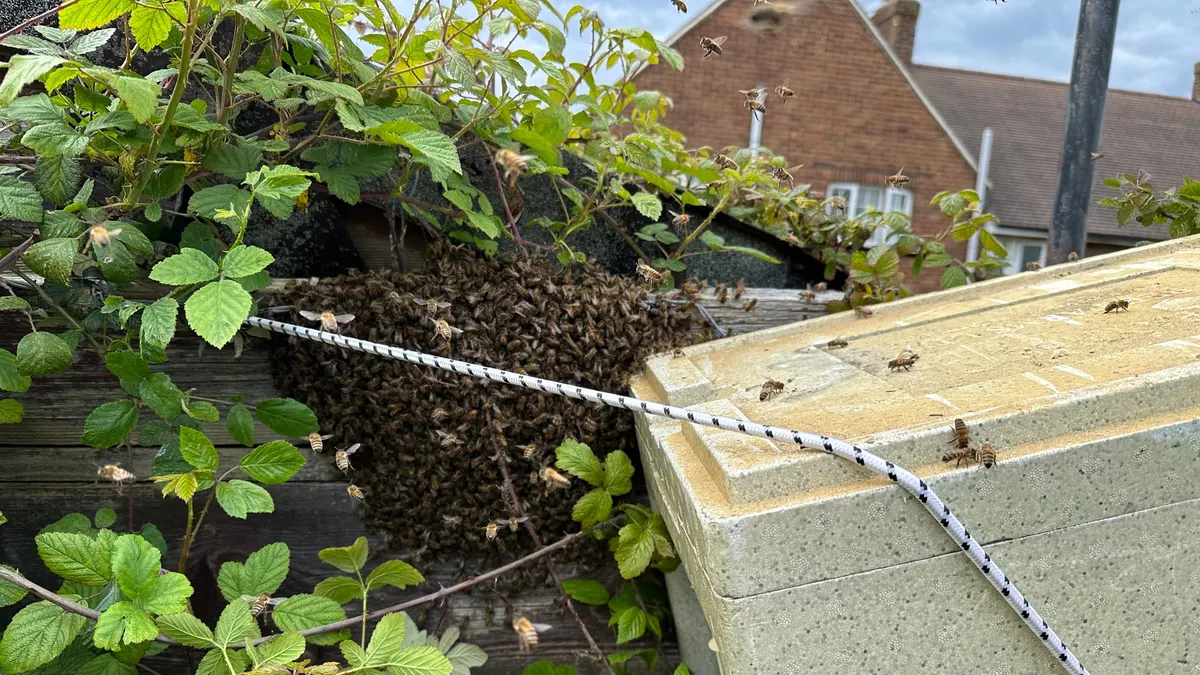
Five swarm traps compared on cavity, frames, size and weight, plus Cornell's bait hive rules, which lures the research supports and when to hang them.