
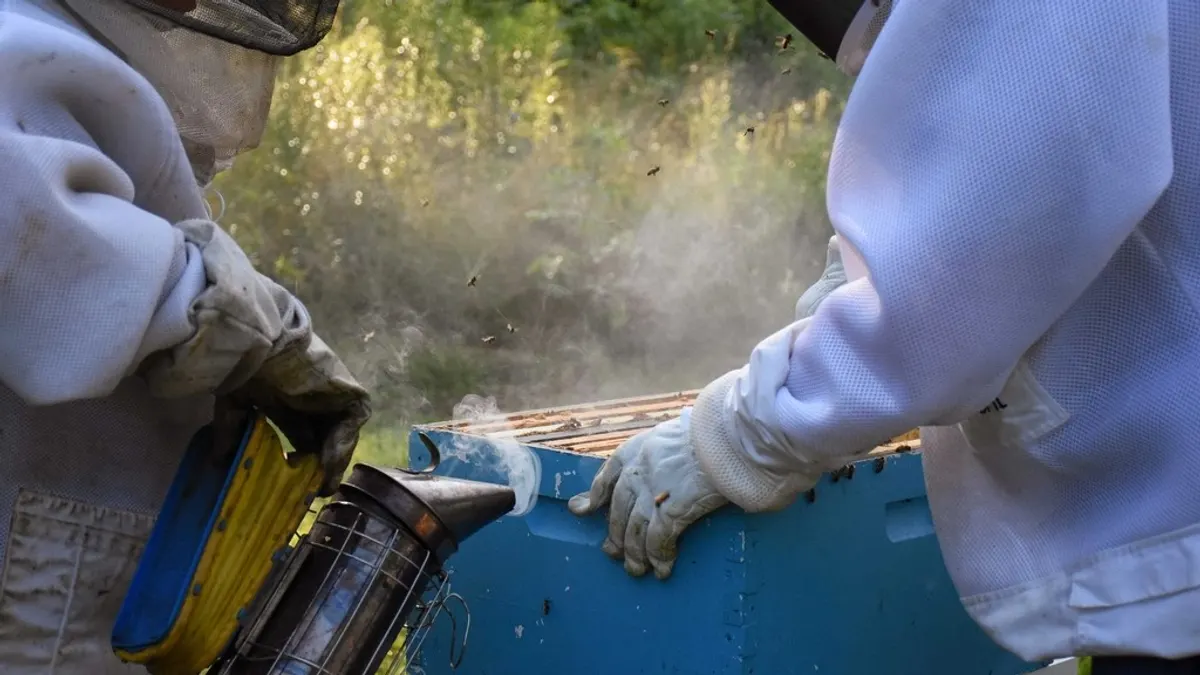
How to Use a Bee Smoker: Fuel, Lighting and How Much Smoke
Affiliate disclosure: product links on this page go to Amazon, or to the maker's own store for brands that sell only direct. As an Amazon Associate we earn from qualifying purchases, at no extra cost to you; a link to a maker's store earns us nothing. No retailer or brand sees our picks before they are published or has any say in them. How we choose.
To use a bee smoker, light a small fire in the bottom of the empty can, pack natural fuel such as pine needles, burlap or cotton on top, and pump the bellows until it gives off thick, white, cool smoke. Then, per the University of Georgia Bee Program and the Mid-Atlantic Apiculture Research and Extension Consortium (MAAREC): puff a little smoke into the entrance, crack the lid and give one or two puffs under it, close it briefly, then open up and use light puffs across the top bars as you work. Use a little smoke, not a lot, and add a few more puffs only if the bees get agitated.
Smoke works by dulling the bees' sense of smell. A 1995 study found it cut the antennae's response to the two main alarm pheromones, and the effect wore off in 10 to 20 minutes. This guide covers what smoke does to bees, which fuels to burn and which to avoid, a lighting method that keeps the smoker going for the whole inspection, and how to put it out without starting a grass fire.
What smoke does to bees (and why it calms them)
When a hive is disturbed, guard bees release an alarm pheromone from glands near the sting. Other bees smell it with their antennae and join the defense. Texas A&M AgriLife Extension's tools factsheet explains the smoker in those terms: smoke masks the bees' ability to sense pheromones, so the alarm signal that would otherwise trigger stinging is suppressed. That is why smoke is said to "calm" bees.
The lab evidence comes from a 1995 study by Visscher, Vetter and Robinson in the Journal of Insect Behavior. Antennae exposed to smoke gave a weaker electrical response to isopentyl acetate and 2-heptanone, the two alarm pheromones tested. The effect was reversible: the antennae returned to normal within 10 to 20 minutes. Smoke dulled the response to a floral scent too, so it interferes with smell in general rather than with the alarm signal alone.
Smoke also changes what the bees do. Australia's professional beekeeping extension service notes that smoke causes bees to stop guarding the entrance, move inside and gorge on honey, and that bees with full stomachs are easier to work. It does not put them to sleep. The University of Georgia Bee Program adds that a loud roar as bees retreat down into the comb is normal.
| Effect | What it means for you | Source |
|---|---|---|
| Dulls the antennae's response to alarm pheromone | One bee's alarm spreads less, so fewer bees join in | Visscher et al., 1995; Texas A&M AgriLife |
| Wears off in 10 to 20 minutes (antenna response) | A long inspection may need a top-up puff | Visscher et al., 1995 |
| Guards leave the entrance and bees move inside | Puffing the entrance first clears the way before you lift the lid | Extension AUS |
| Bees gorge on honey | Fed bees are easier to handle | Extension AUS |
| Bees move away from the smoke | A puff across the top bars clears room for your fingers, so fewer bees get crushed | MAAREC; Texas A&M AgriLife |
The study measured antennae in a lab, not bees in a hive, so treat the 10 to 20 minutes as a guide to why a long inspection may need more smoke, not as a timer.
Best bee smoker fuel
Almost any dry, natural fiber or plant material works. MAAREC's list is cotton rags, pine needles, wood chips or scraps, sawdust or sticks, burlap and corncobs, and it points out that the world is full of free smoker fuel. In Georgia, the UGA Bee Program uses pine straw because it is easy to find, burns readily and makes dense smoke. Texas A&M lists burlap, smoking pellets and cotton as the fuels you can buy.
| Fuel | Cost | Lighting | Notes |
|---|---|---|---|
| Pine needles or pine straw | Free | Lights with a match | UGA's choice: burns readily, dense smoke. Must be dry. |
| Burlap (untreated) | Free if you have sacks, or bought | Lights with a match | Sold as smoker fuel; MAAREC and Texas A&M both list it |
| Cotton rags or cotton fiber | Free or bought | Lights with a match | A rag also works as the top layer that damps the fire |
| Wood chips, shavings, sawdust, sticks | Free | Needs a starter under it | Unpainted, untreated wood only |
| Corncobs | Free | Needs a starter under it | On MAAREC's list |
| Wood or burlap pellets | Bought | Dense; Texas A&M says they may need a propane torch | Convenient to carry |
Fuels to avoid
MAAREC lists pressure-treated lumber, painted wood, cedar, synthetic fabrics, baler twine and any liquid that might give off fumes. Texas A&M adds anything that may contain an insecticide. The smoke goes straight into the hive and onto the comb, so leave out anything you would not want in the honey.
How to light a bee smoker
The steps below combine MAAREC's method with the UGA Bee Program's. The principle in both is that air comes in at the bottom, passes through the burning fuel and leaves through the spout. So the fire belongs at the bottom, with fresh fuel packed on top of it.
- Start with an empty smoker. If there is charcoal from last time, MAAREC suggests tipping it out and using it to help the new fire start.
- Light a starter. MAAREC uses an 8 to 10 inch square of newspaper, lit and pushed into the can with the hive tool. UGA lights a handful of pine straw instead.
- Pump hard. Work the bellows until you have a brisk, hot fire at the bottom.
- Add fuel in stages. Add a little fuel and pump until it burns well, then fill the can.
- Damp the top. MAAREC tops the fuel with a piece of cloth that almost closes off the fire, leaving a small vent. UGA packs more pine straw on top and closes the lid once that layer has caught.
- Pump until the smoke is right. You want thick, white, cool smoke. Once it is lit properly, MAAREC says a little smoke should still come out of the spout when you are not pumping.
Getting the packing right takes practice. Texas A&M says fuel packed too tight chokes the fire, and fuel left too loose burns hot and fast. Cool smoke comes from low in the can. If flames are coming out of the spout, the top layer has caught: add fuel and close the lid. A well-lit smoker, MAAREC says, will not go out when you need it and can make smoke for hours.
How much smoke to use, and where
Use a little, at the right moments. Too much smoke drives the bees off the frames you want to look at, and MAAREC's whole method uses "a little smoke" at each step. The sequence below follows MAAREC and the UGA Bee Program.
| Step | How much smoke | Why |
|---|---|---|
| Approach from the side or rear and smoke the entrance | A little | Clears the guard bees |
| Crack the outer lid | One or two puffs under it, then close it for a moment | Lets the smoke act before the hive is open |
| Lift the inner cover | A little under it as it comes up | Moves bees off the underside |
| Before lifting each frame | A light puff across the top bars | Moves bees off the spots where your fingers go |
| Lifting or replacing a box | A puff between the boxes | Moves clustered bees so they are not crushed |
| If the bees get agitated | A few more puffs | Restores the effect |
Keep the bellows moving now and then so the fire doesn't die between puffs. How long a load lasts depends on the fuel, the size of the can and how much you use it, so Texas A&M advises refilling during a long session. A bigger can goes longer between refills; our bee smoker guide compares chamber sizes. Hang the smoker on the hive by its shield hook while you work, or set it in a metal can, rather than laying it on dry grass.
Smoke helps most when you also keep things steady: slow movements, frames lifted straight up, and a hive tool and frame grip that let you work without jarring the box. MAAREC names crushed bees as the main cause of stings. When you are hunting for the queen, go light on the smoke over the brood frames so you aren't chasing her around; our guide to finding and marking the queen covers where she usually is.
How to put out a bee smoker
A smoker is an open fire, and it can start a brush fire after you have walked away. Texas A&M warns that smokers tend to reignite, so make sure the fire is out and the can is cool before you leave it. Sources differ on the best way to do it:
- Smother it. MAAREC plugs the spout with a cork and lays the smoker on its side to cut off the air. It is cool in about 10 minutes, and the charcoal left inside starts the next fire. Texas A&M also lists plugging the top opening.
- Seal it in a container. Australia's extension service suggests blocking the nozzle and putting the smoker in an airtight, fireproof container. A metal can with a lid, which Texas A&M recommends as a place to set the smoker between uses, does this job.
- Water. Texas A&M lists dumping the fuel into a container of water. Extension AUS prefers filling the smoker with water before emptying it, and warns that emptying it into water or a hole lets embers escape.
The one point every source agrees on: never dump hot coals on the ground. MAAREC notes that many brush fires have started that way.
Fire precautions
- Check the weather. Texas A&M warns that smokers can throw sparks and start fires in dry, windy conditions.
- Keep water and, ideally, a fire extinguisher nearby (Texas A&M).
- Light the smoker over bare ground or in a fireproof container, away from dry vegetation (Extension AUS).
- Hot smoke comes with sparks and flames. If you see them, add fuel (Extension AUS).
- Check your state or county's burn restrictions in fire season. Rules on open flames vary by place.
Can you skip the smoker?
Sometimes. MAAREC says a spray bottle of thin sugar syrup (about 1 part sugar to 2 parts water) works when the bees are generally calm, but a smoker is more effective. The UGA Bee Program calls the smoker the single most important accessory for minimizing stings. MAAREC suggests opening hives near midday in sunny weather, when bees are calmest, and avoiding late afternoon or an approaching thunderstorm.
Smoke reduces stings but doesn't stop them, so wear a veil every time. Our protective gear guide covers what else to wear. If you are about to open your first hive, the package and nuc installation guide walks through that first visit.
What to buy
Any smoker with a heat shield will do; Texas A&M recommends a shield so you don't burn yourself or your suit. The 4 by 7 inch can is the standard size. The VIVO stainless smoker is that pattern, with a heat shield and a hook, and VIVO gives its height as 11 inches and the can as 4 inches across (per the Amazon listing).
If you run more than one or two hives, a taller can holds more fuel between refills. The Foxhound 12.5-inch Pro has a 4-inch chamber and a full heat guard (per the Amazon listing). Our best bee smokers page compares five models.
You don't have to buy fuel if you have pine needles or untreated burlap sacks. If you would rather carry a bag, jute burlap and cotton fiber are both made for smokers and light with a match:
| Fuel | Amount | Best for |
|---|---|---|
| Forest Beekeeping Supply jute burlap | 2 lb bag, cut in strips (per the Amazon listing) | Most beekeepers; packs well over a starter |
| Forest Beekeeping Supply cotton fiber | 1 lb bag (per the Amazon listing) | A quick-lighting starter and top layer |
Frequently asked questions
How do you use a smoker for bees?
Light a small fire in the bottom of the smoker, pack natural fuel on top and pump the bellows until the smoke is thick, white and cool. Puff a little into the hive entrance, then one or two puffs under the lid, wait a moment, open the hive and use light puffs across the top bars as you work.
What does smoke do to bees?
It dulls their sense of smell. A 1995 study found smoke reduced the antennae's response to the main alarm pheromones for 10 to 20 minutes. Bees also leave the entrance, move inside and gorge on honey, which makes them easier to work.
Why does smoke calm bees?
Bees raise the alarm with a pheromone released near the sting, and other bees smell it with their antennae. Smoke masks that scent, so one disturbed bee doesn't rally the others. It does not put the bees to sleep.
What is the best fuel for a bee smoker?
Dry natural material: pine needles or pine straw, untreated burlap, cotton rags, wood chips or corncobs. Avoid painted or pressure-treated wood, cedar, synthetic fabric, baler twine and anything that may contain an insecticide.
How do you keep a bee smoker lit?
Build a hot fire at the bottom first, then add fuel in stages and fill the can, topped with a layer that almost closes off the fire. Pump the bellows now and then during the inspection. Fuel packed too tight chokes the fire; too loose and it burns hot and fast.
How do you put out a bee smoker?
Plug the spout (a cork works) and lay the smoker on its side or seal it in a metal can with a lid; MAAREC says it is cool in about 10 minutes. Some beekeepers fill it with water instead. Never dump hot coals on the ground.
How much smoke should you use on bees?
A little at each step: some at the entrance, one or two puffs under the lid, then light puffs across the top bars before you lift frames. Add a few more puffs only if the bees become agitated.
Sources
- How to Light a Smoker, University of Georgia Bee Program
- Handling Bees, Mid-Atlantic Apiculture Research and Extension Consortium (MAAREC)
- Beekeeping Equipment: Tools (ENTO-PU-179), Texas A&M AgriLife Extension
- Alarm pheromone perception in honey bees is decreased by smoke (Hymenoptera: Apidae), Journal of Insect Behavior (Visscher, Vetter and Robinson, 1995)
- Fire safety for beekeepers, Extension AUS, Professional Beekeepers
Cover photo: John Ann Wynn use smoker by U.S. Department of Agriculture, CC0 1.0, via rawpixel. Cropped.
Related guides
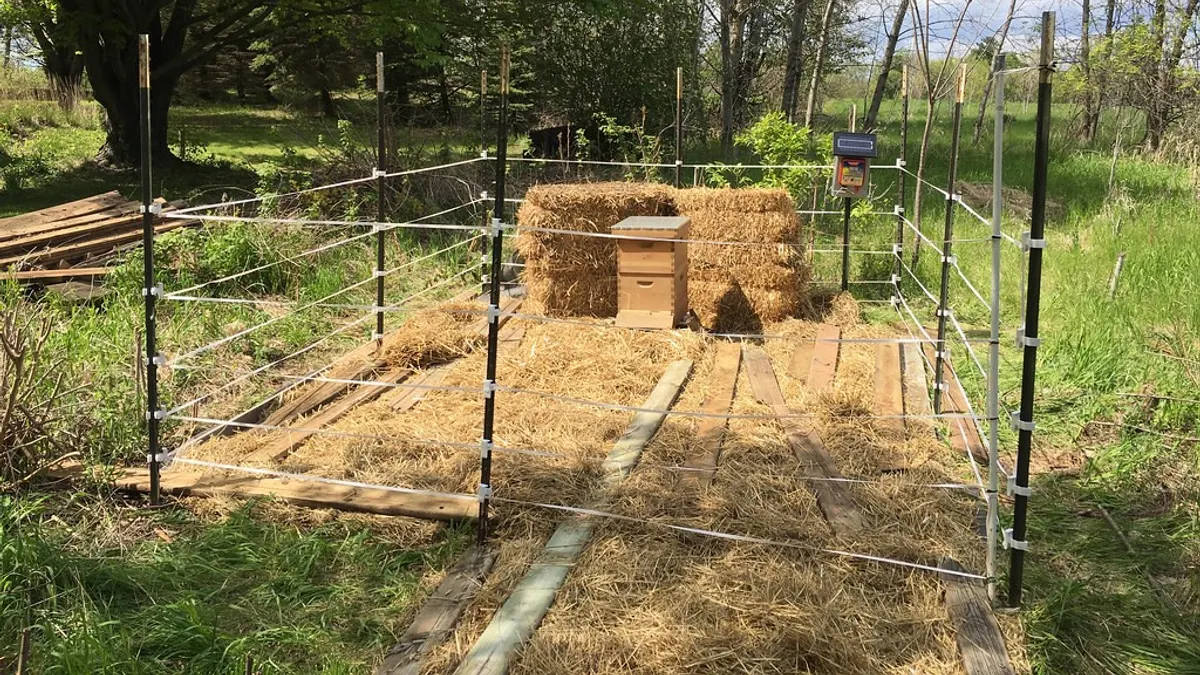
Best Bear Fences for Beehives (2026): Energizers, Kits and the Agencies' Specs
A portable bear kit and three energizers judged against the state wildlife agencies' joule, voltage, spacing, grounding and bait rules.
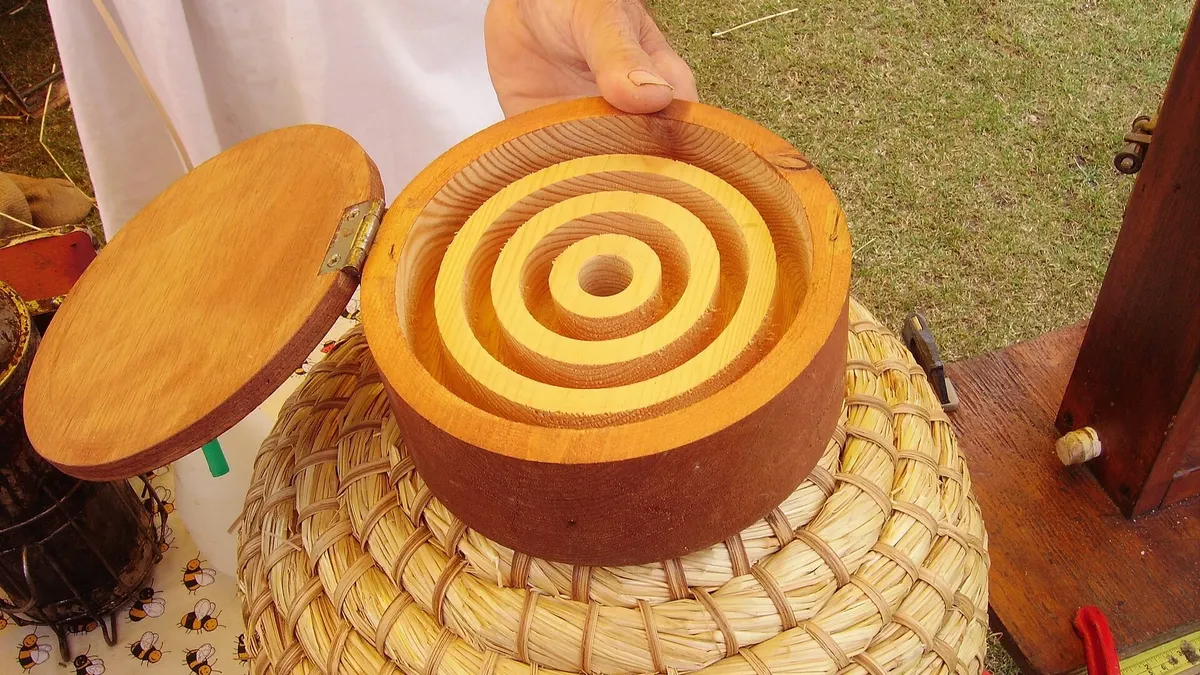
Best Bee Feeders of 2026: Top, Frame, Round and Entrance Feeders Compared
Seven feeders across four types compared on capacity and placement, with when and what to feed from the extension guides.
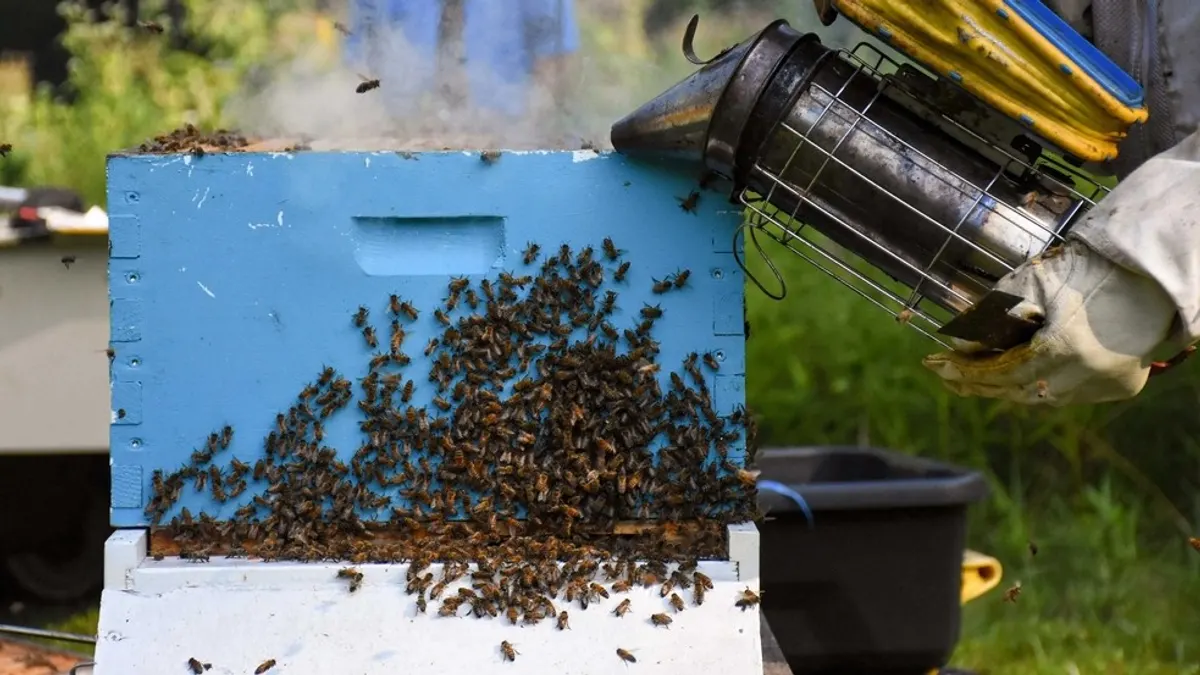
Best Bee Smokers of 2026: Heat Shields, Chamber Size and Bellows Compared
Five smokers compared on chamber size, height, heat shield and price, with the supplier originals they copy and how to keep one lit.