
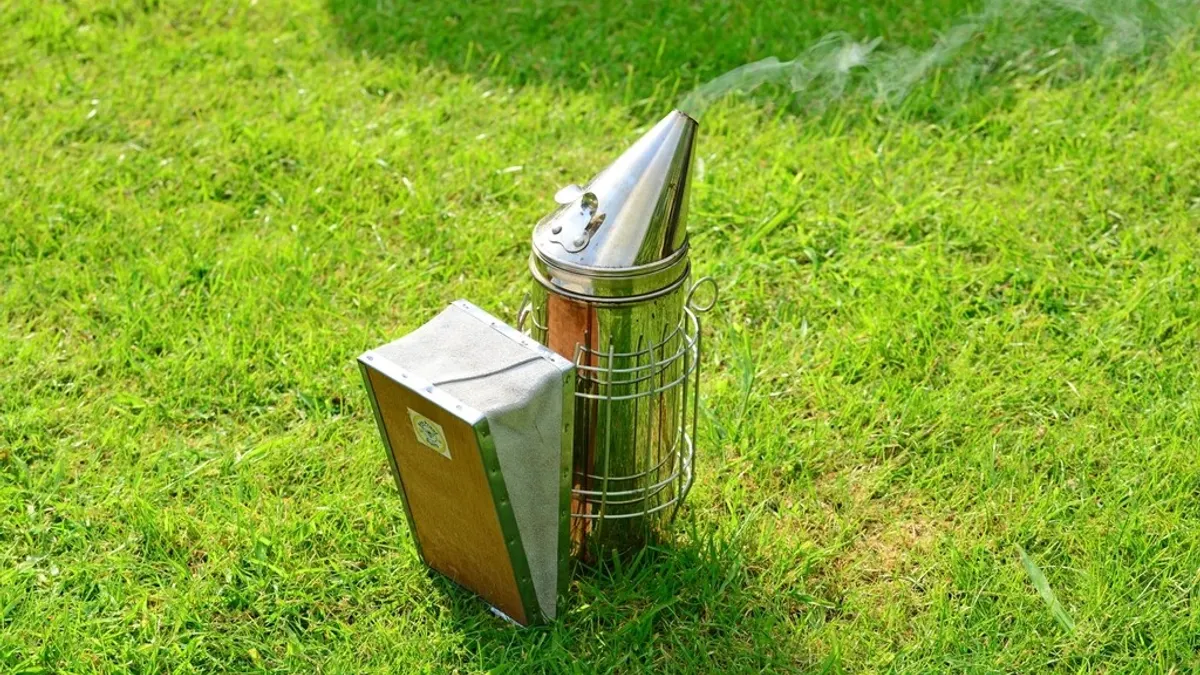
Electric Bee Smokers: Do They Work, and Should You Buy One?
Affiliate disclosure: product links on this page go to Amazon or to the maker's own store. As an Amazon Associate we earn from qualifying purchases, and VEVOR pays us a commission on sales through our VEVOR links, at no extra cost to you; links to other makers' stores earn us nothing. No retailer or brand sees our picks before they are published or has any say in them. How we choose.
Yes, an electric bee smoker makes smoke. In the common type, a small battery fan in the handle takes the place of the bellows: you still light pine needles, burlap or pellets in the can the usual way, then press a switch instead of pumping. A rarer type uses a battery-heated element to make fuel smolder without a flame. Either way, the smoke does the same job as a bellows smoker's: it masks the alarm pheromone that tells other bees to defend the hive.
Even so, for most US backyard beekeepers we would buy a standard bellows smoker such as the VIVO 4 by 7. The seven electric smokers we read on Amazon US on October 22, 2026 were all sold by small third-party sellers rather than beekeeping brands, and none of their listings says what the insulation between the handle and the can is made of. That part has a history: Australia's Border Force warned in 2022 that the insulation board on imported battery smokers is "often made with bonded asbestos." This guide explains both electric types, what they do better and worse than a bellows, the recalls, and the few cases where an electric smoker makes sense.
How an electric bee smoker works
A traditional smoker is a metal can with a grate near the bottom, a spout on the lid and a bellows on the side. Each squeeze of the bellows pushes air in under the fire, and smoke comes out of the spout. Electric smokers change either how the air gets there or how the fuel is lit.
Fan-blown smokers (the kind sold on Amazon)
A small motor and fan sit inside a handle attached to the can, and a switch runs the fan in place of the bellows. Australia's Border Force describes the design the same way: "a small motor and fan contained within an attached handle." The fuel still burns, so lighting, fuel choice and fire precautions are the same as for any smoker. The listings we read give the power as four AA batteries, a 5-volt USB supply, or a built-in 2,800 mAh battery charged over micro-USB (per the Amazon listings).
Heated-element ("no flame") smokers
The second type uses the battery to heat a resistive element inside the can. A US patent for a battery bee smoker granted in 2013 (US 8,353,126, inventor Daniel Stearns) sets out the idea: an element at about 800 to 1,000°F makes fuel "smolder but not immediately burst into flame," so smoke comes on demand instead of from a fire that has to stay lit the whole time. The patent names a fan as an optional alternative to the bellows.
The model on sale is the ANEL Hybrid Smoker 2.0, which keeps a leather bellows and adds electric ignition. German beekeeping retailer Holtermann lists it with a 7.4-volt, 6,000 mAh lithium-ion battery in a fire-resistant pouch, a 10 cm (about 4 inch) chamber with a protective grille and hook, at 219 euros in October 2026. With ANEL's vaporization pads, Holtermann says the element takes about 5 minutes to start producing smoke (it calls it steam) and no flame forms, which is why it markets the smoker for areas with wildfire restrictions. With ordinary fuel, it says, flames can develop and there is a fire hazard, just as with a traditional smoker. The sellers we found are European beekeeping retailers.
| Feature | Bellows smoker | Fan-blown electric | Heated-element electric |
|---|---|---|---|
| How air reaches the fuel | You squeeze the bellows | A battery fan in the handle | A bellows (ANEL) or a fan (patent design) |
| How the fuel is lit | Match or lighter | Match or lighter | Battery-heated element |
| Fuel | Pine needles, burlap, cotton, pellets | The same | The maker's pads, or ordinary fuel |
| Open flame | Yes, inside the can | Yes, inside the can | Not with the pads (per the seller); possible with ordinary fuel |
| Power | None | AA cells, USB or a built-in battery (per the listings) | 7.4 V lithium-ion pack (ANEL, per Holtermann) |
| Where we found it | Beekeeping suppliers and Amazon | Third-party sellers on Amazon | European beekeeping retailers |
Do electric bee smokers work?
They make smoke, and smoke is what calms bees. As our guide to using a bee smoker explains, smoke dulls the antennae's response to the alarm pheromone that guard bees release, so one disturbed bee doesn't rally the rest. Nothing about that depends on whether a bellows or a fan pushes the air.
What changes is the handling:
- No pumping. A switch replaces the bellows. That is the real draw if squeezing a bellows through gloves is hard on your hands.
- Something else to keep charged. A flat battery means no airflow partway through an inspection, so you carry spare cells or charge before each visit.
- Electronics next to a fire. The motor and battery sit in a handle attached to a hot can, with an insulation board between the two. That board is the part regulators have found asbestos in (below).
- Little independent information. The extension guides we rely on for smoker use describe bellows smokers: Texas A&M AgriLife's tools factsheet says smokers have plastic or leather bellows, and MAAREC's lighting method is built around pumping one. Neither mentions electric models. The listings are thin too; one for a battery smoker even describes its bellows.
The asbestos problem with imported smokers
Regulators in Australia and the UK have acted on imported bee smokers after finding asbestos in them, both electric and manual:
| Date | Who | Smoker type | Part affected |
|---|---|---|---|
| April 17, 2019 | Australia's Heads of Workplace Safety Authorities (national safety alert) | Electric, battery-operated, imported | The insulation component |
| March 15, 2022 | Australian Border Force | Electric and manual | Electric: the insulation board between handle and can. Manual: woven, cloth-like bellows fabric |
| August 18, 2023 | UK product safety recall (case 2308-0055) | Large stainless steel smoker with a leather bellows, made in China | "May contain a small amount of chrysotile asbestos" |
The Border Force warning is the most detailed. Between September 2021 and January 31, 2022, it detected 39 imports of bee smokers at risk of containing asbestos, 13 for businesses and 26 in individuals' names. It says both types are "commonly advertised to the Australian market on online shopping websites by international sellers," and that some parts come from countries with no asbestos ban. It also warns that a declaration of no asbestos from the overseas supplier is not, on its own, evidence.
We found no bee smoker in the US Consumer Product Safety Commission's recall database when we searched it on October 22, 2026. That is the absence of a recall, not a test result. The Australian finds came from sampling at the border, and none of the seven Amazon US listings we read says what its insulation board is made of.
If you already own an imported smoker
Australia's extension service for professional beekeepers tells owners of a recalled electric smoker to wrap it in sturdy plastic, take it to a hazardous waste facility, and ask the place of sale for a refund. The UK recall notice adds: don't shake or brush off fibers, which can make them airborne; wipe dust off skin, clothing and shoes with a damp cloth, patting rather than rubbing. If the board between the handle and the can on a smoker you own is cracked or crumbling, stop using it and ask your local solid waste agency how to dispose of it. Don't break, sand or brush the board.
Bellows smokers are not automatically in the clear
Two of the three notices above cover manual smokers. The Border Force names the woven bellows fabric on manual imports, and the UK recall was a bellows smoker. The electric design adds one more part to worry about, but no listing can prove any smoker is asbestos-free, and Australia's border agency does not accept a supplier's word alone. What a known beekeeping brand or supplier gives you is a named model, someone to ask, and a recall notice if one is ever issued. Keep the receipt.
Who an electric smoker suits
| Your situation | What we suggest | Why |
|---|---|---|
| New beekeeper, one to a few hives | A bellows smoker | No battery to charge, and it is the tool the extension guides teach with |
| Squeezing a bellows hurts your hands | A fan-blown smoker is worth a look, from a seller that answers what the insulation board is made of | The switch replaces pumping |
| Many hives in one visit | A taller bellows smoker | Texas A&M says refill time depends on smoker size, use and fuel; a bigger can holds more |
| Fire restrictions where you keep bees | Check local rules first | A fan-blown smoker still burns its fuel; only the heated-element type run on its pads is sold as flameless |
Using an electric smoker
A fan-blown smoker is still a fire, so the routine in our how-to guide applies almost unchanged. Load natural fuel such as pine needles or untreated burlap, light it at the bottom, then run the fan instead of pumping until the smoke is thick, white and cool. Following MAAREC, puff a little at the entrance, one or two puffs under the lid, and light puffs across the top bars as you work.
Put it out the same way too: MAAREC plugs the spout and lays the smoker on its side, and Texas A&M suggests a metal can with a lid. Never dump hot coals on the ground. Read the seller's manual for anything specific to the battery and fan, and check the fire danger before lighting any smoker in dry, windy weather.
What we would buy
A stainless bellows smoker with a heat shield, from a brand with its own product page. The VIVO stainless smoker is the standard 4 by 7 inch pattern with a heat shield and a hook (VIVO's product page gives the canister size), and it suits one to a few hives.
For more hives per load, the Foxhound 12.5-inch Pro has a 4-inch chamber and a full heat guard (per the Amazon listing), so it holds more fuel between refills. If you would rather buy from a beekeeping supplier, Dadant's smoker range listed no electric model when we checked on October 22, 2026; its smokers run from 4 by 7 to 4 by 10 inch stainless cans, with or without shields. Our best bee smokers page compares five models.
Smoke reduces stings but doesn't stop them, so wear a veil every time; our protective gear guide covers the rest. If your first hive is still on order, the package and nuc installation guide walks through the first visit, smoker in hand.
Frequently asked questions
Do electric bee smokers work?
Yes. The common type uses a battery fan in place of the bellows to blow air through burning fuel, so it makes the same smoke a regular smoker does, and smoke calms bees by masking their alarm pheromone. The difference is that you press a switch instead of pumping.
How does an electric bee smoker work?
Most use a small motor and fan in the handle to push air through fuel you light yourself. A rarer type, such as the ANEL Hybrid Smoker 2.0, uses a battery-heated element to make special pads or ordinary fuel smolder; its seller says the pads produce smoke without a flame.
Do electric bee smokers still need fuel?
Yes. Fan-blown models burn the same pine needles, burlap, cotton or pellets as a regular smoker. Heated-element models use the maker's pads or ordinary fuel, and with ordinary fuel flames can still develop.
Do electric bee smokers contain asbestos?
Some imported ones have. Australia issued a national safety alert in 2019 over asbestos in the insulation of imported battery-operated bee smokers, and in 2022 its Border Force said the insulation board between handle and can is often made with bonded asbestos. Manual smokers have been caught too: the UK recalled one in 2023.
What batteries does an electric bee smoker use?
The fan-blown models on Amazon US list four AA batteries, a 5-volt USB supply or a built-in rechargeable battery (one lists 2,800 mAh, charged by micro-USB). The ANEL heated-element smoker uses a 7.4-volt, 6,000 mAh lithium-ion pack, per its German retailer.
Is an electric smoker better than a regular bee smoker?
Not for most beekeepers. A bellows smoker needs no battery, is the type the extension guides teach with, and comes from established brands. An electric smoker mainly helps if pumping a bellows is hard on your hands, or, in the heated-element form, where fire rules limit open flames.
Can you use an electric bee smoker during a burn ban?
A fan-blown smoker still burns its fuel, so treat it like any open flame. The ANEL heated-element model is sold as usable in wildfire-restricted areas when run on its pads, but rules vary by place, so check your state or county restrictions before lighting anything.
Sources
- Rise of asbestos found in imported bee smokers, Australian Border Force
- Asbestos in insulation component of battery-operated bee smokers, NT WorkSafe (national alert by the Heads of Workplace Safety Authorities)
- Fire safety for beekeepers, Extension AUS, Professional Beekeepers
- Product Recall: Large Stainless-Steel Beehive Smoker (2308-0055), GOV.UK Product Safety Alerts, Reports and Recalls
- US8353126B2: Bee smoker, Google Patents (inventor Daniel Stearns)
- Anel Hybrid Smoker 2.0 with 7.4 V rechargeable battery, Holtermann
- Bee Smokers, Dadant & Sons
- Recalls, US Consumer Product Safety Commission
- Handling Bees, Mid-Atlantic Apiculture Research and Extension Consortium (MAAREC)
- Beekeeping Equipment: Tools (ENTO-PU-179), Texas A&M AgriLife Extension
Cover photo: Bee smoker green grass, CC0 1.0, via rawpixel. Cropped.
Related guides
Best Hive Top Feeders of 2026: Bee Hive Top Feeders Compared
Six top feeders compared on capacity, drowning guard and fit, plus how much a full load adds to winter stores, setup, robbing and what to skip.
How to Use a Bee Smoker: Fuel, Lighting and How Much Smoke
Light it from the bottom, pack natural fuel on top, puff a little at the entrance and under the lid. Plus why smoke calms bees and how to put it out.
Best Bear Fences for Beehives (2026): Energizers, Kits and the Agencies' Specs
A portable bear kit and three energizers judged against the state wildlife agencies' joule, voltage, spacing, grounding and bait rules.