
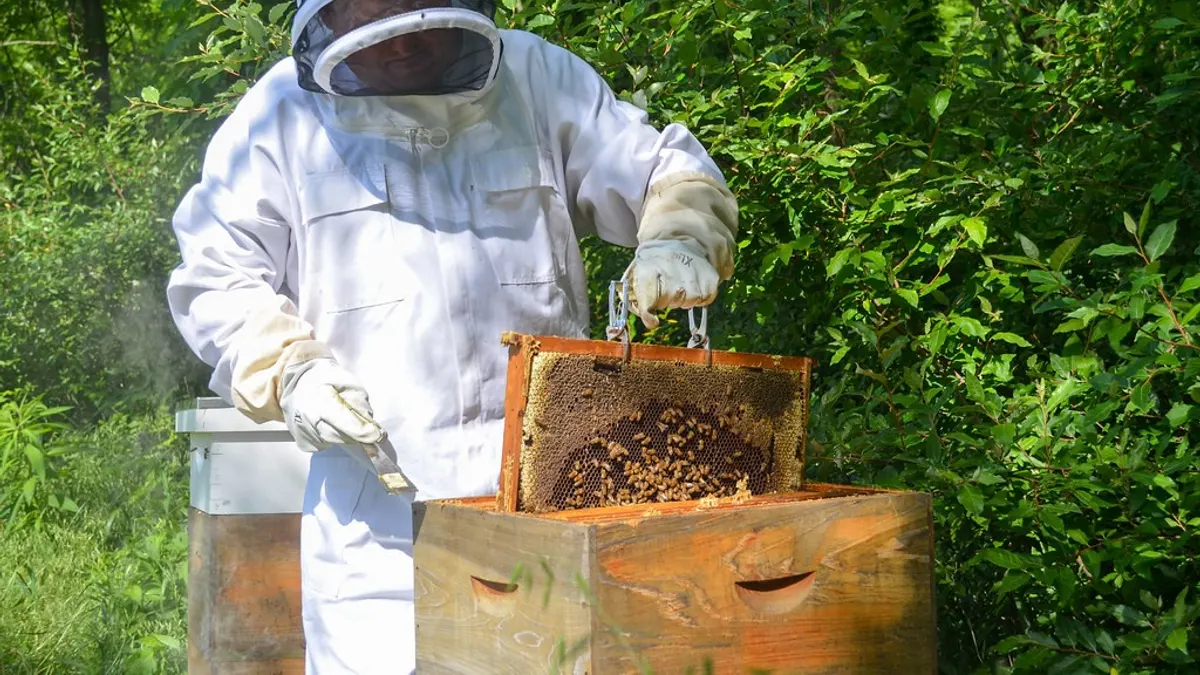
Do You Have to Register Your Beehives? Rules and Fees in All 50 States
Affiliate disclosure: product links on this page go to Amazon, or to the maker's own store for brands that sell only direct. As an Amazon Associate we earn from qualifying purchases, at no extra cost to you; a link to a maker's store earns us nothing. No retailer or brand sees our picks before they are published or has any say in them. How we choose.
Twenty-five states and the District of Columbia require every beekeeper to register, from the first colony. Three more (Idaho, New Mexico and Oregon) require it only above a colony count, eight run a voluntary registry, and fourteen have no state registration at all. Pick your state and enter your hive count below to see whether you must register, when, and what the state charges; every state's card links to the statute, rule or apiary program page we read. Registration is separate from city and county rules on how many hives you can keep and where, and from the permits most states require to bring bees across state lines.
Do you have to register your beehives?
Some states charge per location.
Pennsylvania
Every beekeeper (apiary registration)
Deadline and renewal
Renewed about every two years
State fee for your apiary
$10 for about two years
With 2 colonies, 25 of 50 states would require you to register (plus the District of Columbia).
State registration only. Cities and counties can add their own rules (hive limits, setbacks, permits), and most states require a health certificate or permit to bring bees into the state. Fees are the state's published schedule; check the linked source before paying.
Beehive registration rules, all 50 states and DC
25
States requiring every beekeeper to register
plus DC
3
Required only above a colony count
Idaho, New Mexico, Oregon
8
Voluntary state registry
14
No state registration
Showing 51 of 51 jurisdictions
- AlabamaALRequired for allFrom $4
Every beekeeper, by number of colonies
- When
- Annually; certificates expire Sep 30 and a 15% late fee applies after Oct 1
- Fee
- $4 (1 to 9 colonies) up to $60 (500 or more)
- Law
- Code of Ala. § 2-14-3
Source: Source: Code of Ala. § 2-14-3
- AlaskaAKRequired for allNo fee listed
Every person keeping bees
- When
- Within 72 hours of acquiring bees, then annually
- Fee
- No fee on the state form
- Law
- AS 03.47.030; 11 AAC 35.020
Imported bees need a health certificate sent to the Division of Agriculture within 72 hours of arrival.
- ArizonaAZNo state registration
Before placing bees in a commercial farming area, the owner must get the landowner's permission and notify, in writing, the growers whose land the bees may forage. Some sites claim Arizona requires registration; we found no such provision.
- Law
- A.R.S. § 3-367.02 (notice only)
- ArkansasARRequired for all
Every apiary (location where bees are kept)
- When
- Within 10 days of acquiring bees, or before moving bees into Arkansas
- Fee
- No fee listed by the department
- Law
- Arkansas apiary law and rules (Arkansas Department of Agriculture)
Source: Source: Arkansas apiary law and rules (Arkansas Department of Agriculture)
- CaliforniaCARequired for allFrom $10
Every owner, broker or person in possession of an apiary, in each county
- When
- January 1 each year, or within 30 days of acquiring bees; fees are late after the end of January (50% penalty)
- Fee
- $10 (1 to 9 colonies), $100 (10 to 50), $250 (51 or more); based on last year's highest colony count
- Law
- Cal. Food & Agric. Code §§ 29040-29045; 3 CCR § 2951
Register through the state's BeeWhere system. San Diego County waives the $10 fee for 1 to 9 colonies.
Source: Source: Cal. Food & Agric. Code §§ 29040-29045; 3 CCR § 2951
- ColoradoCONo state registration
The Colorado Bee Act has no registration section; the state dropped registration fees in 1990. Moving bees still needs certificates and permits.
- Law
- C.R.S. Title 35, Art. 25
Source: Source: C.R.S. Title 35, Art. 25
- ConnecticutCTRequired for allFree
Anyone owning one or more hives
- When
- On acquiring bees, then annually by October 1
- Fee
- Free (certificate issued without a fee)
- Law
- Conn. Gen. Stat. § 22-89
Registration is online through eLicense.
Source: Source: Conn. Gen. Stat. § 22-89
- DelawareDERequired for all
All persons keeping bees or moving bees into the state
- When
- Annually by January 30; within 10 days if bees are acquired later
- Fee
- No fee in the statute
- Law
- 3 Del. C. § 7504
Penalty $100 to $1,000 per count. Hives must have movable frames.
Source: Source: 3 Del. C. § 7504
- District of ColumbiaDCRequired for all$10 per apiary
All colonies in the District
- When
- Within 30 days of establishing a colony
- Fee
- $10 per apiary
- Law
- Sustainable Urban Agriculture Apiculture Act of 2014
No more than four hives on a property of a quarter acre or less without DOEE permission; hives at least 15 feet from a property line; a permit is needed to move bees or used equipment in or out.
Source: Source: Sustainable Urban Agriculture Apiculture Act of 2014
- FloridaFLRequired for allFrom $10
Each beekeeper with colonies in Florida
- When
- On starting, after an inspection; renew annually on the certificate date
- Fee
- $10 (1 to 5 colonies) up to $100 (501 or more)
- Law
- Fla. Stat. § 586.045
Every hive must carry the registration number, at least half an inch high. Residential apiaries follow a compliance agreement.
Source: Source: Fla. Stat. § 586.045
- GeorgiaGANo state registration
Anyone selling bees or queens commercially must be licensed by the Georgia Department of Agriculture, and bringing bees on comb into Georgia needs a permit.
- Law
- O.C.G.A. § 2-14-40; GDA Rule 40-4-1
- HawaiiHIVoluntaryFree
Voluntary beekeeper registry
- When
- Any time
- Fee
- Free
- Law
- Act 200 (2011)
Created by Act 200 (2011); the state says no regulatory or fiscal actions are linked to the registry.
Source: Source: Act 200 (2011)
- IdahoIDRequired above a sizeNot required under 51 colonies
Commercial beekeepers with more than 50 colonies
- When
- Annually
- Fee
- Registration fee plus a honey advertising tax per colony
- Law
- Idaho Code Title 22, Ch. 25
Registration is recommended, not required, below 51 colonies.
- IllinoisILRequired for allFree
Every person keeping one or more colonies
- When
- Annually
- Fee
- Free
- Law
- 510 ILCS 20 (Bees and Apiaries Act)
- IndianaINNo state registration
The apiary chapter covers inspections and certificates for bees brought into Indiana.
- Law
- IC 14-24-8
Source: Source: IC 14-24-8
- IowaIAVoluntaryFree
Voluntary apiary registry
- When
- Any time
- Fee
- Free
- Law
- Iowa Admin. Code 21-45.31(206)
Registering matters here: commercial applicators may not apply bee-toxic pesticides to blooming crops within one mile of a registered apiary between 8 AM and 6 PM.
- KansasKSNo state registration
Kansas repealed its apiary inspection law in 2002.
- Law
- K.S.A. 2-411 to 2-418 (repealed 2002)
- KentuckyKYVoluntaryFree
Voluntary pesticide-notification registry
- When
- Any time
- Fee
- Free
- Law
- KRS 252.170 to 252.240
Kentucky law allows registration fees but sets no registration requirement; the state beekeepers' association confirms none is required.
Source: Source: KRS 252.170 to 252.240
- LouisianaLARequired for allFrom $0
Every beekeeper, for every colony or apiary
- When
- On or before October 1 each year, or before bringing bees into the state
- Fee
- Residents (Class A): free for 1 to 10 colonies, up to $50; non-residents pay more (Class B, from $16)
- Law
- La. R.S. 3:2305
Permits expire September 30.
Source: Source: La. R.S. 3:2305
- MaineMERequired for allFrom $10
Anyone who keeps honey bees (apiary license)
- When
- Annually
- Fee
- $10 (1 to 10 colonies) up to $550 (7,001 or more)
- Law
- Maine DACF apiary license and fee schedule
Bees brought into Maine need an import notification, a health certificate and a fee.
- MarylandMDRequired for allFree
Everyone who keeps bees
- When
- Within 30 days of first obtaining a colony, then annually
- Fee
- Free
- Law
- COMAR 15.07.01
Source: Source: COMAR 15.07.01
- MassachusettsMAVoluntaryFree
Requested by the state apiary program
- When
- Any time
- Fee
- Free online form
- Law
- M.G.L. c. 128, §§ 32-38
The state bee law (G.L. c. 128, §§ 32 to 38) and its rules contain no registration requirement; MDAR asks beekeepers to register so it can alert them to nearby foulbrood. UMass Extension's FAQ says registration is required; we could not find the provision.
Source: Source: M.G.L. c. 128, §§ 32-38
- MichiganMINo state registration
Apiary inspections are optional, and the state says shipments of bees into Michigan are currently unrestricted.
- Law
- MDARD apiary program
Source: Source: MDARD apiary program
- MinnesotaMNNo state registration
The state inspects on request, for a fee, mainly for beekeepers moving bees out of state.
- Law
- Minn. Stat. § 17.445
Source: Source: Minn. Stat. § 17.445
- MississippiMSNo state registration
Migratory beekeepers, queen breeders and package producers need inspection certificates before shipping bees.
- Law
- Miss. Code §§ 69-25-101 to 69-25-109
- MissouriMONo state registration
A movement permit is needed to bring bees, comb or used equipment into Missouri.
- Law
- RSMo Ch. 264
Source: Source: RSMo Ch. 264
- MontanaMTRequired for all$10 to $50 per site
Anyone owning or possessing an apiary, per site
- When
- Re-register each site before April 1
- Fee
- $10 to $50 per apiary site a year (set by rule)
- Law
- MCA 80-6-102, 80-6-111, 80-6-114
Hobbyist site registrations cover up to 10 hives (raised from 5 in 2025). General apiary sites must be 3 miles from other keepers' sites.
- NebraskaNENo state registration
The Nebraska Apiary Act covers disease control and inspections.
- Law
- Neb. Rev. Stat. 81-2,165 to 81-2,180
- NevadaNVNo state registration
Chapter 552 covers inspections, movable-frame hives and imported bees.
- Law
- NRS Ch. 552
Source: Source: NRS Ch. 552
- New HampshireNHVoluntaryFree
Voluntary apiary registration
- When
- Any time
- Fee
- Free
- Law
- NH Department of Agriculture
Registered apiary locations are shared with pesticide control for notice to applicators.
- New JerseyNJRequired for all
All beekeepers who overwinter bees
- When
- Annually; certificates expire December 31
- Fee
- Not stated in the registration rule
- Law
- N.J.A.C. 2:24-3.1
New registrants must take a beginner beekeeping course (college, State Apiarist or local club) within a year of first registering. State registration is valid in every municipality.
Source: Source: N.J.A.C. 2:24-3.1
- New MexicoNMRequired above a sizeNot required at your size$3 per apiary
Commercial apiaries: 15 or more colonies at one location north of I-40, 25 or more south of it
- When
- Annually by November 1, or before establishing the apiary
- Fee
- $3 per commercial apiary, capped at $200 a year
- Law
- NMSA 76-9-10; 21.27.2 NMAC
- New YorkNYRequired for all
All beekeepers (since Dec 23, 2021)
- When
- Register, then renew annually
- Fee
- No fee listed by the department
- Law
- NYS Department of Agriculture and Markets
New York City also requires each hive to be registered with the city Health Department every year by May 31 (free).
- North CarolinaNCVoluntary
Voluntary, for aerial-pesticide notification
- When
- Calendar year; renew annually
- Law
- 02 NCAC 48A .0262, .0263
Registration exists so aerial applicators can notify beekeepers. Selling bees needs a state permit.
Source: Source: 02 NCAC 48A .0262, .0263
- North DakotaNDRequired for all$5 + $0.15 a colony
Every person who owns or manages bees, from 1 colony up (license plus hive locations)
- When
- Licenses expire December 31; locations registered before hives are placed
- Fee
- $5 license plus 15 cents per colony
- Law
- NDCC 4.1-16
Signs with the beekeeper's contact information must be posted at each apiary.
Source: Source: NDCC 4.1-16
- OhioOHRequired for allFree
Every apiary location
- When
- Registrations expire May 31 and are renewed annually
- Fee
- Free from the 2026 renewal (the $5 fee was removed by HB 96)
- Law
- Ohio Rev. Code 909.02
Source: Source: Ohio Rev. Code 909.02
- OklahomaOKVoluntary$10
Voluntary registration; migratory beekeepers use the same form
- When
- Any time
- Fee
- $10 (migratory beekeepers $100)
- Law
- Oklahoma Apiary Act (ODAFF)
Registered apiaries post the last three digits of the registration number on a sign.
- OregonORRequired above a sizeNot required under 5 coloniesUp to $10 + $0.50 a colony
Anyone owning or in charge of 5 or more colonies
- When
- Annually before June 1
- Fee
- Up to $10 per application plus 50 cents a colony (higher after July 1); nucleus colonies free
- Law
- ORS 602.090
The statute sets maximums; the Oregon Department of Agriculture sets the actual rate by rule.
Source: Source: ORS 602.090
- PennsylvaniaPARequired for all$10
Every beekeeper (apiary registration)
- When
- Renewed about every two years
- Fee
- $10 for about two years
- Law
- 3 Pa.C.S. Ch. 21 (Bee Law)
- Rhode IslandRIRequired for all
All apiaries, commercial or private
- When
- Annually by March 1
- Fee
- No fee in the statute
- Law
- R.I. Gen. Laws § 4-12-12
Anyone who sells or gives away bees must notify the state of the new owner within 30 days.
Source: Source: R.I. Gen. Laws § 4-12-12
- South CarolinaSCNo state registration
Bees brought into the state need an entry permit from Clemson's Department of Plant Industry and a certificate of inspection. Clemson runs a voluntary bee mapping program.
- Law
- S.C. Code § 46-37-10
Source: Source: S.C. Code § 46-37-10
- South DakotaSDRequired for all$16 per location
Anyone owning, leasing or possessing bees, for each apiary
- When
- Before February 1 each year, within 10 days of acquiring bees, or before moving bees in
- Fee
- $16 per permanent location ($40 per temporary location)
- Law
- SDCL 38-18-3, 38-18-5
Failing to register is a Class 2 misdemeanor plus a civil penalty of up to $500 per location.
Source: Source: SDCL 38-18-3, 38-18-5
- TennesseeTNRequired for all
Every beekeeper with one or more colonies, per apiary location
- When
- Every three years; new locations within 30 days
- Fee
- No fee listed by the department
- Law
- Tenn. Code § 44-15-105
Each beekeeper gets a unique registration number that can be used to brand hives.
Source: Source: Tenn. Code § 44-15-105
- TexasTXVoluntary$35
Voluntary beekeeper registration
- When
- Valid through August 31 of the state fiscal year
- Fee
- $35
- Law
- Tex. Agric. Code Ch. 131
Required to remove bees legally (it exempts the beekeeper from structural pest control licensing). Equipment kept away from the beekeeper's home must be marked.
Source: Source: Tex. Agric. Code Ch. 131
- UtahUTRequired for allFrom $15
All beekeepers
- When
- Annually
- Fee
- $15 (1 to 20 hives), $50 (21 to 100), $100 (101 or more)
- Law
- Utah Code 4-11 (Bee Inspection Act)
Registered beekeepers get free inspections and health certificates.
- VermontVTRequired for all$10 per location
Anyone owning a bee, apiary, colony or hive
- When
- Annually, with an annual report
- Fee
- $10 per apiary location a year
- Law
- 6 V.S.A. §§ 3022-3023
The annual report covers locations, colony counts, disease and mite treatment.
Source: Source: 6 V.S.A. §§ 3022-3023
- VirginiaVANo state registration
An entry permit is required to bring bees or used equipment into Virginia. Mapping in BeeCheck is free and voluntary.
- Law
- Va. Code §§ 3.2-4400 to 3.2-4416
- WashingtonWARequired for allFrom $5
All beekeepers, backyard or business
- When
- Annually by April 1; registrations expire December 31
- Fee
- $5 (1 to 5 colonies) up to $300 (1,001 or more)
- Law
- RCW 15.60; WAC 16-602-025
Late fee: 1.5% of the fee per month late; first-time registrants owe no late fee.
- West VirginiaWVRequired for allFree
All persons keeping bees
- When
- Within 10 days of acquiring bees; certificates expire June 30 and renew annually
- Fee
- Free
- Law
- W. Va. Code § 19-13-4
A registered beekeeper who follows the state's best management practices is shielded from liability for injury or damage from the bees, except for gross negligence or intentional acts.
Source: Source: W. Va. Code § 19-13-4
- WisconsinWINo state registration
Shipments of bees or used equipment into Wisconsin must be reported in advance.
- Law
- Wisconsin DATCP apiary program
- WyomingWYRequired for allFree for hobbyists
Anyone who owns or possesses any class of apiary
- When
- Before April 1 each year (registration window February to April)
- Fee
- Hobbyist apiaries (5 hives or fewer, all in one apiary) get a no-fee certificate; other classes pay the department's set fee
- Law
- Wyo. Stat. §§ 11-7-201, 11-7-205, 11-7-212
General apiaries of different owners must be 2 miles apart. Registered locations need at least 10 colonies for 45 days in season, except keepers with fewer than 5 colonies in one apiary.
The short answer, by state
| Rule | States |
|---|---|
| Every beekeeper must register | Alabama, Alaska, Arkansas, California, Connecticut, Delaware, Florida, Illinois, Louisiana, Maine, Maryland, Montana, New Jersey, New York, North Dakota, Ohio, Pennsylvania, Rhode Island, South Dakota, Tennessee, Utah, Vermont, Washington, West Virginia, Wyoming, plus DC |
| Required above a size | Idaho (more than 50 colonies), New Mexico (15 colonies at one location north of I-40, 25 south of it), Oregon (5 or more colonies) |
| Voluntary state registry | Hawaii, Iowa, Kentucky, Massachusetts, New Hampshire, North Carolina, Oklahoma, Texas |
| No state registration | Arizona, Colorado, Georgia, Indiana, Kansas, Michigan, Minnesota, Mississippi, Missouri, Nebraska, Nevada, South Carolina, Virginia, Wisconsin |
What it costs
Many required states charge nothing: Connecticut, Illinois, Maryland, West Virginia, and Ohio from its 2026 renewal, when the state dropped its $5 fee. Where there is a fee, small apiaries pay little. Alabama charges $4 for 1 to 9 colonies, Washington $5 for 1 to 5, Florida and California $10 at the smallest tier, Maine $10 for 1 to 10, Utah $15 for up to 20 hives, and North Dakota $5 plus 15 cents a colony. Vermont and South Dakota charge per location ($10 and $16), Montana $10 to $50 per apiary site, and Pennsylvania $10 for about two years. Wyoming gives hobbyists with five hives or fewer in one apiary a no-fee certificate. Where a source lists no fee, the tool says so rather than guessing.
Deadlines worth knowing
Several states want new beekeepers registered within days, not at renewal: Alaska within 72 hours of acquiring bees, Arkansas, Delaware, South Dakota and West Virginia within 10 days, and California, Maryland, Tennessee and DC within 30 days. Annual renewal dates vary from January 1 (California) to October 1 (Connecticut and Louisiana). Tennessee is the outlier, renewing every three years.
Rules that surprise people
- New Jersey requires first-time registrants to take a beginner beekeeping course within a year, from a college, the State Apiarist or a local club.
- West Virginia shields a registered beekeeper who follows the state's best management practices from liability for injuries or damage caused by the bees, except for gross negligence.
- Iowa registration is voluntary but valuable: commercial pesticide applicators may not spray bee-toxic products on blooming crops within a mile of a registered apiary between 8 AM and 6 PM.
- Texas registration ($35) is voluntary, but it is what lets a beekeeper remove bees from buildings without a structural pest control license.
- Montana raised its hobbyist apiary limit from 5 to 10 hives in 2025, and Montana and Wyoming keep commercial apiaries of different owners 3 and 2 miles apart.
- Florida requires the registration number painted on every hive, at least half an inch high.
Where other lists get it wrong
We checked each state against its own law rather than copying other lists, and found three common errors. Massachusetts is often listed as requiring registration, and UMass Extension's FAQ says so, but the state's bee law (General Laws chapter 128, sections 32 to 38) and its apiary rules (330 CMR 8.00) have no registration section; the state apiary program asks beekeepers to register so it can warn them about nearby foulbrood. Kentucky law allows registration fees but sets no registration requirement, which the state beekeepers' association confirms. And Arizona has no state registration; its law only requires beekeepers placing hives in commercial farming areas to notify the growers. New York, on the other hand, is sometimes listed as voluntary but has required every beekeeper to register since December 23, 2021.
Before you set up hives
State registration is one of three checks. The second is local: cities, counties and homeowners' associations set hive limits and setbacks (DC, for example, allows four hives on a lot of a quarter acre or less). The third is movement: most states require a health certificate or permit to bring bees or used equipment in, so buying a nuc across a state line can need paperwork even where keeping bees does not. Our package and nuc installation guide and seasonal calendar cover what to do once the bees arrive.
Frequently asked questions
Do I have to register my beehive?
In 25 states and DC, yes, from the first colony. Idaho, New Mexico and Oregon require it only above a colony count, eight states offer voluntary registration, and fourteen have none. The tool above gives your state's rule, deadline and fee.
How much does it cost to register beehives?
Often nothing: Connecticut, Illinois, Maryland, West Virginia and Ohio charge no fee. Elsewhere small apiaries pay a few dollars, such as $4 in Alabama, $5 in Washington and $10 in Florida, California and Maine.
What happens if I do not register my bees?
Penalties vary. Delaware sets civil penalties of $100 to $1,000 per count, and South Dakota makes it a Class 2 misdemeanor plus up to $500 per location. Unregistered apiaries also miss disease and pesticide alerts.
Is registration the same as a permit to keep bees?
No. State registration tells the apiary program where hives are so it can inspect for disease and send alerts. Whether you may keep bees on your lot is set by city or county zoning and any homeowners' association.
Do I need to register if I only have one hive?
In every state that requires registration for all beekeepers, yes; the rule applies from the first colony. Oregon starts at five colonies, New Mexico at a commercial apiary of 15 or 25 colonies, and Idaho above 50.
Does registration mean the state will inspect my hives?
It can. Registered apiaries are the ones inspectors can find, and several states inspect when a disease turns up nearby. Many states also inspect free on request for registered beekeepers, such as Utah.
Sources
- US Inspection Services (state apiary contacts and laws), Apiary Inspectors of America
- N.J.A.C. 2:24-3.1, Registration requirements, Cornell Legal Information Institute
- W. Va. Code § 19-13-4, Registration of bees, West Virginia Legislature
- Honey Bee Health: beekeeper registration, New York State Department of Agriculture and Markets
- General Laws, Part I, Title XIX, Chapter 128, Massachusetts Legislature
- Apiary Registration (WAC 16-602-025 fee schedule), Washington State Department of Agriculture
Cover photo: 220601-GI410-A-107 by LouisvilleUSACE, CC BY 2.0, via Flickr. Cropped.
Related guides
Honey Bee Colony Losses by State and Quarter: USDA Data, 2015 to 2026
Eleven years of USDA colony loss data in one place: how many colonies die each quarter, which states lose the most, and what is killing them.
Beekeeping Startup Cost Calculator: What the First Year Costs, Hive by Hive
Per-hive and one-time costs for the first year, with every default priced from a named supplier or listing on October 9, 2026.
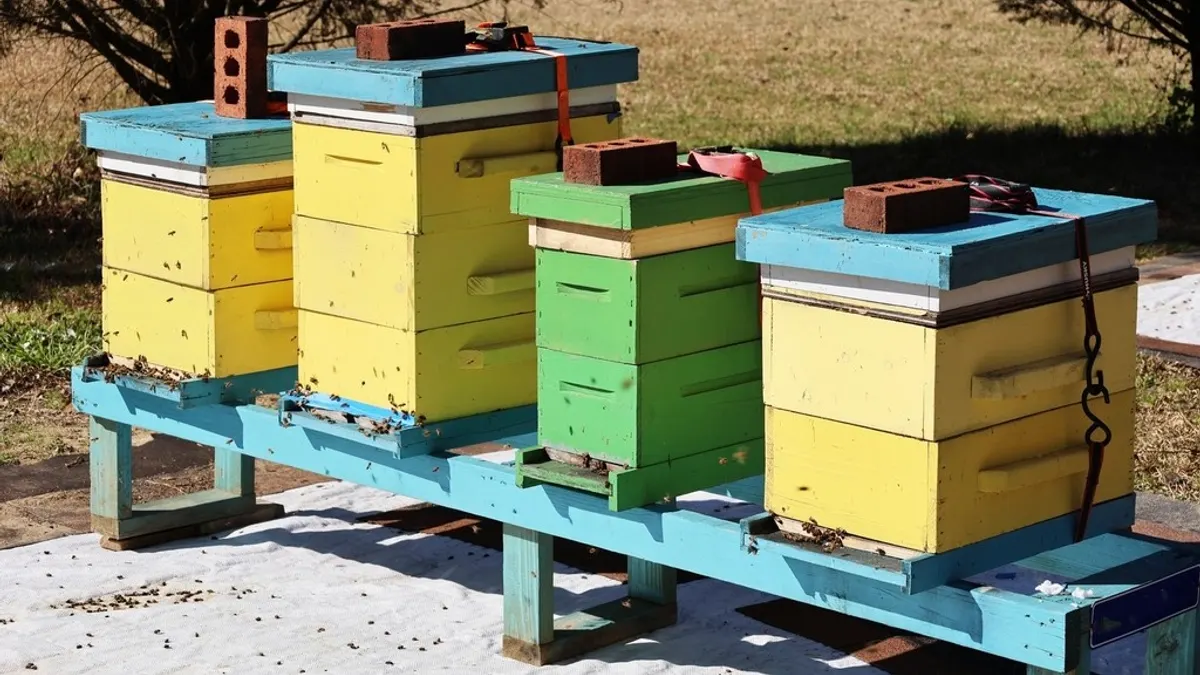
Best Beehives for Beginners (2026): Langstroth Woodenware for a First Colony
Seven Langstroth hives for a first colony, compared on boxes and frames included, finish, dimensions and what the extension guides say a beginner needs.